

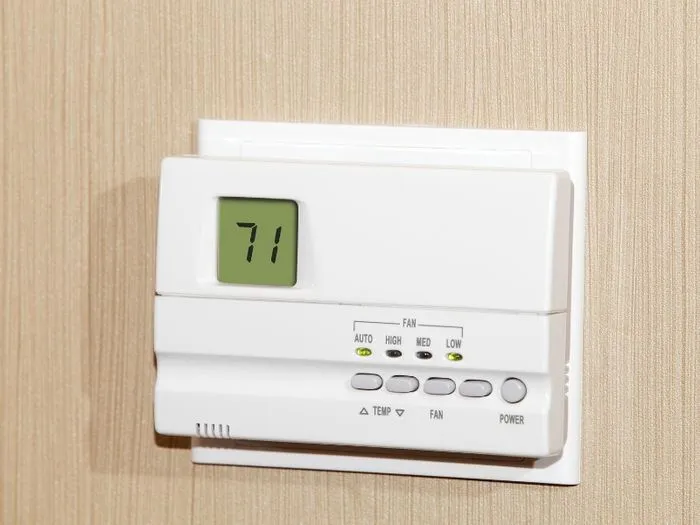
Your commercial HVAC system might be perfectly sized, properly maintained, and running flawlessly, yet still fail to deliver comfortable conditions efficiently. The culprit often hides in plain sight: thermostat placement. Where you install thermostats determines whether your HVAC system responds to actual building conditions or chases false readings that waste energy while leaving occupants uncomfortable.
Thermostat placement errors rank among the most overlooked causes of commercial HVAC inefficiency. A thermostat mounted in the wrong location reads temperatures that don’t represent actual occupied space conditions, triggering inappropriate system responses that overcool, overheat, or cycle unnecessarily. Understanding placement principles helps businesses identify existing problems and avoid mistakes during renovations or new installations.
How Thermostats Read and Respond to Temperature
Thermostats measure air temperature at their specific mounting location and compare readings against programmed setpoints. When measured temperatures differ from targets, thermostats signal HVAC systems to provide heating or cooling until conditions satisfy setpoint requirements.
This simple process works perfectly when thermostats measure representative temperatures reflecting actual conditions throughout controlled zones. Problems develop when local conditions at thermostat locations differ from conditions in occupied spaces the system should actually serve.
A thermostat reading 68°F in a lobby might trigger heating, while offices throughout the building sit at an uncomfortable 75°F because the lobby runs cooler from frequent door openings. The system responds correctly to thermostat readings but incorrectly to actual building needs. Proper placement ensures thermostats sense conditions representing the spaces they control.
Common Thermostat Placement Mistakes in Commercial Buildings
Several placement errors occur repeatedly in commercial installations, each creating specific problems that undermine HVAC efficiency and occupant comfort.
Near exterior doors and windows exposes thermostats to temperature swings from infiltration, solar gain, and radiant heat transfer through glass. A thermostat mounted near a south-facing window reads artificially high temperatures on sunny afternoons, triggering excessive cooling while shaded areas of the building remain too warm. Similarly, placement near entry doors causes false readings whenever doors open, introducing outdoor air directly to thermostat sensors.
Direct sunlight creates dramatic false readings as solar radiation heats thermostat housings beyond actual air temperatures. Even brief sun exposure during morning or afternoon hours causes significant measurement errors, triggering inappropriate HVAC responses. Understanding how placement affects performance connects directly to extending your commercial HVAC system’s lifespan by preventing unnecessary cycling.
Behind furniture or equipment restricts airflow around thermostats, preventing accurate temperature sensing. Thermostats surrounded by desks, filing cabinets, or equipment read stagnant air temperatures that don’t reflect conditions in open areas where occupants actually work.
Near heat-generating equipment, including copiers, coffee makers, computers, refrigerators, and lighting fixtures, causes artificially elevated readings. Equipment heat creates localized warm zones that thermostats interpret as general building conditions, triggering cooling throughout spaces that may actually need heating.
Exterior walls expose thermostats to temperature transfer through building envelopes. Even well-insulated walls conduct some heat, causing thermostats mounted on exterior surfaces to read warmer in summer and cooler in winter than actual interior air temperatures.
In unoccupied areas like storage rooms, corridors, or mechanical spaces, readings are irrelevant to occupied zone conditions. Thermostats should monitor spaces where people actually work, not transitional or support areas with different thermal characteristics.
Near supply air diffusers exposes thermostats directly to conditioned air before it mixes with room air. These locations read temperatures reflecting HVAC output rather than actual space conditions, causing systems to cycle off prematurely before rooms reach comfortable temperatures.
Near return air grilles create opposite problems where thermostats read mixed air returning from multiple zones rather than specific local conditions. While less problematic than supply air exposure, return grille proximity still produces readings not represent conditions in occupied portions of controlled zones.
Optimal Thermostat Placement Guidelines
Proper thermostat placement follows established principles, ensuring accurate temperature sensing that drives appropriate HVAC responses.
Mount on interior walls away from exterior envelope influence. Interior partitions maintain stable temperatures unaffected by outdoor conditions, providing reliable mounting surfaces for accurate sensing.
Position at breathing zone height, typically 48-60 inches above floor level. This height captures temperatures occupants actually experience rather than stratified conditions near floors or ceilings that differ from occupied zone temperatures.
Maintain clearance from heat sources, keeping thermostats at least 3-5 feet from equipment, lighting, and appliances generating heat. Greater distances prove necessary for high-heat equipment like commercial coffee stations or copy centers.
Avoid direct sunlight exposure at all times throughout the day. Track sun angles seasonally to ensure mounting locations remain shaded year-round, not just during site visits that might occur at different times than problematic sun exposure.
Ensure adequate airflow around thermostat locations without direct exposure to supply or return air streams. Thermostats need circulating room air reaching sensors while avoiding concentrated airflows that don’t represent general conditions.
Select representative locations reflecting conditions throughout controlled zones. In open offices, central locations work well. In spaces with varying conditions, thermostats should monitor areas where most occupants spend time rather than peripheral zones with different characteristics.
Consider traffic patterns, avoiding locations where people congregate or pass frequently. Body heat from crowds affects readings, and high-traffic areas experience more temperature variation than typical occupied spaces.
The Impact of Poor Placement on Energy Costs
Thermostat placement errors translate directly into wasted energy and inflated utility bills. Systems responding to false readings operate more than necessary while failing to maintain comfortable conditions where they matter.
A thermostat reading 5°F warmer than actual room temperature due to sun exposure or equipment heat triggers cooling that drops actual room temperature below comfortable levels. Occupants feel cold despite the thermostat indicating appropriate temperatures. Meanwhile, cooling systems consume energy, maintaining artificial conditions that nobody actually experiences.
Conversely, thermostats in drafty locations near doors read cooler than actual building temperatures, triggering heating that overheats occupied spaces. Occupants open windows or complain about the heat while thermostats continue calling for more warming based on false cold readings.
Short cycling from placement near supply diffusers prevents systems from running efficient extended cycles. Regular filter changes help systems operate efficiently, but placement errors override maintenance benefits by forcing inappropriate operating patterns regardless of equipment condition.
Studies suggest thermostat placement errors can increase HVAC energy consumption 10-20% compared to optimal locations. For commercial facilities spending $3,000-5,000 monthly on HVAC energy, this represents $300-1,000 in monthly waste, $3,600-12,000 annually from a problem costing relatively little to correct.
Diagnosing Placement Problems in Existing Buildings
Several indicators suggest thermostat placement problems requiring investigation and correction.
Persistent comfort complaints from occupants in specific areas while thermostat readings appear normal indicate a disconnection between measured and actual conditions. If the thermostat shows 72°F but workers consistently complain about heat or cold, placement may cause the discrepancy.
Significant temperature variation between thermostat readings and portable thermometer measurements in occupied areas confirms placement issues. Walk through controlled zones with an accurate thermometer, comparing readings to thermostat displays.
Excessive system cycling with short run times followed by brief off periods suggests thermostat exposure to conditions causing rapid temperature swings. Track system operation patterns, looking for cycling inconsistent with building load characteristics.
Thermostat readings changing rapidly when conditions shouldn’t vary indicates exposure to localized influences like sun movement, equipment operation cycles, or door opening patterns.
HVAC systems running continuously without satisfying setpoints may indicate thermostats in locations where conditions genuinely differ from controlled zones, causing systems to chase unachievable targets.
Correcting Thermostat Placement Issues
Relocating poorly placed thermostats provides immediate efficiency improvements and comfort benefits that justify modest correction costs.
Professional assessment identifies optimal locations considering building layout, HVAC zone design, occupancy patterns, and potential interference sources. HVAC technicians understand how placement affects system operation and recommend locations providing accurate, representative sensing.
Relocation involves running new thermostat wiring to improved locations, patching original mounting points, and reprogramming systems to operate with relocated controls. Most relocations are complete within 2-4 hours per thermostat.
Wireless thermostats provide flexibility for placement optimization without running new wiring. Battery-powered wireless sensors communicate with HVAC controls, allowing optimal positioning regardless of existing wiring locations.
Multiple sensors averaging temperatures across zones provide more representative readings than single-point measurements in challenging spaces. Some commercial systems support multiple sensor inputs that prevent any single location from dominating control decisions.
Shielding existing thermostats from sun exposure using small covers or relocating nearby heat sources offers partial solutions when full relocation proves impractical. However, addressing root placement problems typically provides better results than workarounds.
Thermostat Placement During Renovations and New Construction
Building projects provide opportunities to ensure optimal thermostat placement from the start rather than correcting problems later.
Coordinate placement early in design phases when wall locations and HVAC zones are being determined. Specifying thermostat locations during design prevents installers from making convenience-driven decisions during construction.
Review proposed locations against placement principles before construction begins. Architectural plans should show thermostat positions that designers and HVAC engineers have verified as appropriate.
Inspect installations before walls close to verify thermostats are positioned correctly. Correcting placement before drywall installation costs far less than relocating afterward.
Consider future changes that might affect placement suitability. A location working well for current use might become problematic if renovations add heat-generating equipment or change occupancy patterns.
Zone Design and Thermostat Placement
Commercial buildings with multiple HVAC zones require thoughtful thermostat placement for each zone, ensuring independent areas receive appropriate control.
Each zone needs representative sensing in locations reflecting that specific zone’s conditions. A single thermostat cannot properly control areas with significantly different characteristics, regardless of placement.
Zone boundaries should align with spaces having similar thermal loads and comfort requirements. Combining a windowed perimeter area with an interior core zone under single thermostat control guarantees one area remains uncomfortable while the other satisfies the setpoint.
Properly sized zones with appropriate thermostat placement enable choosing the right size HVAC system that delivers efficient operation through accurate load matching rather than oversized equipment compensating for control problems.
Frequently Asked Questions
Where is the best place to mount a commercial thermostat?
Mount commercial thermostats on interior walls at 48-60 inches height, away from windows, exterior doors, direct sunlight, heat-generating equipment, and supply/return air vents. Select locations representing typical conditions in occupied areas of controlled zones rather than peripheral or transitional spaces.
How far should a thermostat be from a window or exterior door?
Maintain a minimum 10-15 feet distance from exterior doors and windows to avoid temperature swings from infiltration and solar gain. Greater distances prove necessary for large window walls or frequently used entries introducing substantial outdoor air.
Can thermostat placement really affect my energy bills significantly?
Yes. Studies indicate improper thermostat placement can increase HVAC energy consumption 10-20%. For commercial facilities spending $3,000-5,000 monthly on conditioning, this represents $300-1,000 in monthly waste that proper placement eliminates.
How do I know if my current thermostat placement is causing problems?
Indicators include persistent comfort complaints despite normal thermostat readings, significant differences between thermostat displays and portable thermometer measurements, excessive system cycling, rapid thermostat reading changes, and systems running continuously without satisfying setpoints.
Should I relocate my thermostat myself or hire a professional?
Commercial thermostat relocation should be performed by licensed HVAC professionals who understand proper placement principles, can run new wiring safely, and will reprogram systems correctly. DIY relocation risks electrical hazards, code violations, and choosing equally problematic new locations.
Does thermostat placement matter if I have a smart thermostat?
Absolutely. Smart thermostats offer advanced features but still rely on accurate temperature sensing at their mounting location. Poor placement causes smart thermostats to make sophisticated decisions based on inaccurate information, potentially wasting more energy through automated responses to false readings.
Optimize Your HVAC Efficiency with Proper Thermostat Placement
Thermostat placement directly determines whether your commercial HVAC system operates efficiently or wastes energy chasing false readings. Proper positioning ensures accurate temperature sensing that drives appropriate system responses, maintaining comfort while minimizing energy consumption.
Top Pick Mechanical helps businesses throughout Fresno and surrounding Texas communities optimize thermostat placement for maximum HVAC efficiency. Our experienced technicians assess current installations, identify placement problems, and relocate thermostats to optimal positions that improve comfort and reduce energy costs. We understand how placement interacts with building design, HVAC zoning, and occupancy patterns to ensure thermostats provide accurate readings, driving efficient system operation.
Contact Top Pick Mechanical at 713-469-0024 for professional thermostat assessment and placement optimization that improves your commercial HVAC performance while reducing operational costs.