
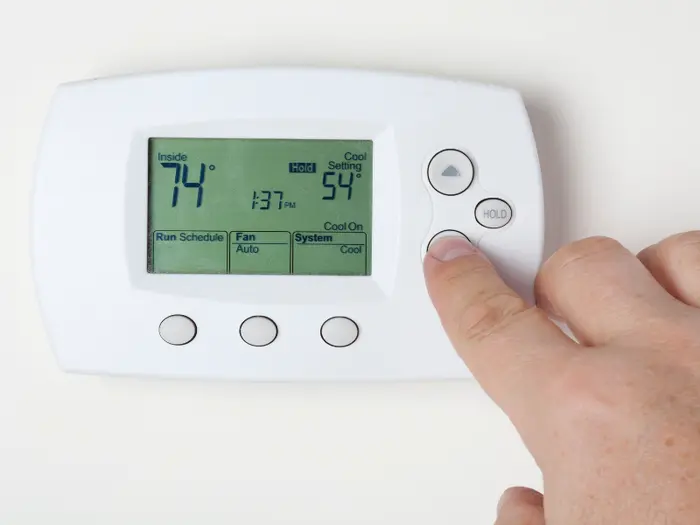
Commercial thermostats serve as the command center for HVAC systems, controlling temperature, scheduling, and energy consumption throughout your facility. When thermostats fail, whether gradually or suddenly, the entire HVAC system loses its ability to respond appropriately to building conditions. The result is wasted energy, uncomfortable occupants, and equipment stress that shortens system lifespan.
Unlike dramatic equipment failures that announce themselves loudly, thermostat problems often develop subtly. Businesses adapt to gradually worsening conditions without recognizing that a relatively inexpensive thermostat replacement could resolve persistent comfort and efficiency issues. Understanding the warning signs helps facility managers act before failing thermostats create larger problems.
Sign 1: Temperature Readings Don’t Match Actual Conditions
The most obvious thermostat problem occurs when displayed temperatures differ significantly from actual room conditions. If your thermostat shows 72°F but portable thermometers consistently read 68°F or 76°F, the thermostat’s temperature sensor has likely failed or drifted out of calibration.
What’s happening: Thermostats use temperature sensors, typically thermistors, that measure electrical resistance changes corresponding to temperature variations. Over time, these sensors degrade, drift, or fail, providing inaccurate readings that mislead HVAC control decisions.
The impact: Inaccurate temperature sensing causes systems to overcool, overheat, or cycle inappropriately. A thermostat reading 3°F low triggers heating when spaces are already comfortable, wasting energy while creating uncomfortable conditions. Reading 3°F high causes opposite problems with excessive cooling.
What to check: Walk through controlled zones with an accurate digital thermometer, comparing readings to thermostat displays. Differences exceeding 2-3°F suggest sensor problems. Check multiple locations to verify the problem lies with the thermostat rather than placement issues, causing legitimate reading variations.
When to replace: Sensor calibration sometimes restores accuracy, but replacement typically proves more cost-effective than repeated calibration attempts on aging thermostats. Modern thermostats with fresh sensors and improved technology provide better long-term accuracy than recalibrated older units.
Sign 2: HVAC System Runs Constantly or Won’t Turn On
Thermostats control when HVAC systems operate. When systems run continuously without cycling off or refuse to start despite calling for conditioning, thermostat communication failures often cause the problem.
What’s happening: Thermostats signal HVAC equipment through electrical connections or wireless communication. Failed relays, corroded wiring connections, damaged control boards, or wireless communication problems prevent thermostats from properly controlling equipment operation.
Constant running indicates: The thermostat may be stuck sending “on” signals regardless of temperature conditions. Alternatively, inaccurate temperature sensing (see Sign 1) causes the thermostat to perpetually call for conditioning it believes is needed but actually isn’t.
System not starting suggests: Communication between thermostat and equipment has failed. The thermostat may display normally and appear to call for heating or cooling, but signals never reach the HVAC equipment.
Diagnostic steps: Verify the thermostat displays and responds to input normally. Check that programmed schedules and setpoints are appropriate. If the thermostat appears functional but the equipment doesn’t respond, the problem may lie in wiring, equipment controls, or the thermostat’s output circuits.
When to replace: Intermittent communication problems that come and go almost always indicate failing thermostat components. While professional diagnosis confirms the fault location, thermostats causing sporadic communication failures rarely improve and typically worsen until replacement becomes unavoidable. Acting before complete failure prevents emergencies during extreme weather.
Sign 3: Programs Won’t Save or Reset Randomly
Modern commercial thermostats store programmed schedules, setpoints, and operational parameters in memory. When programming won’t save, resets unexpectedly, or reverts to factory defaults, memory or power supply problems indicate failing components.
What’s happening: Thermostats use battery backup or capacitor systems to retain programming during power interruptions. Failed batteries, degraded capacitors, or corrupted memory prevent reliable program storage. Power supply problems also cause random resets during operation.
Common symptoms include: Schedules disappearing overnight, setpoints reverting to defaults, date and time resetting repeatedly, or custom settings vanishing after power blips that shouldn’t affect properly functioning units.
The operational impact: Unreliable programming defeats energy-saving schedules that reduce conditioning during unoccupied periods. Businesses paying for sophisticated programmable thermostats receive no benefit when programs won’t persist. Staff waste time repeatedly reprogramming thermostats that should retain settings automatically.
Battery replacement: Many thermostats use replaceable batteries for memory backup. Replace batteries before concluding the thermostat needs replacement. However, units requiring frequent battery replacement despite using quality batteries likely have underlying power management problems justifying replacement.
When to replace: If programming problems persist after battery replacement, or if non-battery thermostats exhibit memory failures, replacement provides the only reliable solution. Modern thermostats with improved memory systems and power management offer better reliability than aging units with deteriorating components.
Sign 4: Unresponsive Controls or Display Problems
Physical interface problems, including unresponsive buttons, erratic touchscreens, blank displays, or flickering screens, indicate failing thermostat hardware requiring replacement.
What’s happening: Thermostats endure years of environmental exposure, including temperature cycling, humidity variations, and physical interaction. Button contacts wear, touchscreen digitizers fail, display backlights burn out, and circuit board connections loosen, all causing interface problems that prevent normal operation.
Button and touchscreen issues: Controls requiring multiple presses, registering wrong inputs, or responding intermittently frustrate users and prevent accurate programming. Staff unable to adjust settings during comfort problems cannot respond to changing needs.
Display problems: Blank screens, partial displays, flickering, or faded segments prevent reading current conditions or confirming setting changes. Even if the thermostat functions internally, users cannot interact effectively with invisible or illegible interfaces.
Why this matters for energy costs: Staff unable to program thermostats properly due to interface problems often leave systems running continuously rather than fighting unresponsive controls. Proper filter maintenance keeps equipment efficient, but thermostat problems override maintenance benefits when controls prevent appropriate scheduling.
When to replace: Interface problems rarely improve and typically worsen as physical components continue degrading. Replacement restores full control capability while providing modern interface improvements, including clearer displays, more intuitive controls, and often smartphone integration for remote management.
Sign 5: Frequent Short Cycling of HVAC Equipment
Short cycling, HVAC equipment starting and stopping every few minutes rather than running normal extended cycles, often originates from thermostat problems rather than equipment failures.
What’s happening: Failing thermostat components cause erratic temperature readings or control signal instability that triggers inappropriate cycling. The thermostat may sense temperature swings that aren’t actually occurring, or control circuits may send intermittent signals, causing equipment to start and stop rapidly.
Differentiating from equipment problems: Short cycling can result from HVAC equipment issues, including refrigerant problems, airflow restrictions, or oversized systems. However, if equipment operated normally before cycling problems began, or if cycling occurs with multiple HVAC units controlled by the same thermostat, the thermostat becomes the likely culprit.
The damage short cycling causes: Compressors and fan motors endure maximum stress during startup when electrical current draws spike to 5-6 times running levels. Repeated starting accelerates wear on these expensive components, potentially causing premature failures costing thousands of dollars. This directly undermines efforts toward extending your commercial HVAC system’s lifespan.
When to replace: Short cycling from thermostat problems requires prompt replacement to prevent equipment damage. The modest cost of thermostat replacement proves insignificant compared to compressor or motor repairs resulting from prolonged short cycling.
Additional Warning Signs Worth Noting
Beyond the five primary indicators, several other symptoms suggest thermostat problems:
Inconsistent zone control, where some areas receive appropriate conditioning while others don’t, despite being controlled by the same thermostat, may indicate failing thermostat zone control capabilities.
Unusual noises, including clicking or buzzing from thermostat housings, suggest failing relays or electrical problems within the unit.
Hot thermostat housings indicate electrical problems, creating heat that will damage components and potentially create fire hazards.
Outdated technology alone justifies replacement in many cases. Thermostats more than 10-15 years old lack efficiency features available in modern units that reduce energy consumption 10-20% compared to older technology.
Repair vs. Replace: Making the Right Decision
Some thermostat problems allow repair while others clearly warrant replacement.
Consider repair when:
- Problems involve simple fixes like battery replacement or loose wiring connections
- The thermostat is relatively new, with remaining warranty coverage
- Issues developed suddenly after recent changes, such as renovations or electrical work
Replacement makes more sense when:
- Thermostats exceed 10 years of age regardless of their current function
- Multiple symptoms appear simultaneously
- Problems recur after previous repair attempts
- Technology limitations prevent the desired functionality
- Repair costs approach 50% of replacement costs
Modern Thermostat Benefits Worth Considering
Replacing failing thermostats provides opportunities to upgrade functionality beyond simply restoring basic operation.
Programmable scheduling enables automatic temperature setbacks during unoccupied periods, reducing energy consumption 10-15% compared to constant setpoint operation.
Smart connectivity allows remote monitoring and adjustment through smartphone apps, providing control flexibility and real-time system visibility from anywhere.
Learning capabilities in advanced thermostats automatically optimize schedules based on occupancy patterns and user adjustments.
Energy reporting tracks consumption patterns, helping identify waste and verify savings from efficiency improvements.
Multi-zone coordination manages multiple HVAC zones from unified interfaces, simplifying building-wide comfort and efficiency management.
Integration capabilities connect with building automation systems, occupancy sensors, and other smart building technologies.
Professional Thermostat Assessment and Replacement
Commercial thermostat replacement requires professional assessment, ensuring correct product selection and proper installation.
Product selection involves matching thermostat capabilities to HVAC system requirements, including voltage compatibility, staging capability, heat pump compatibility, and zone control needs. Wrong thermostat selection causes immediate problems or prevents full HVAC system functionality.
Installation requirements include proper wiring connections, system programming, communication setup for smart thermostats, and verification of correct operation with all HVAC modes. Commercial thermostats often control complex multi-stage systems requiring careful configuration.
Calibration and testing confirm accurate temperature sensing and appropriate system responses to thermostat commands. Professional installation includes operational verification that DIY installation often skips.
Building code compliance for commercial thermostat installation may require permits and inspections, depending on local jurisdiction requirements. Licensed contractors handle compliance requirements appropriately.
Preventing Thermostat Problems
While all thermostats eventually require replacement, proper care extends service life:
Keep thermostats clean using soft cloths to remove dust accumulation on housings and screens. Avoid spraying cleaners directly on units.
Replace batteries proactively on annual schedules rather than waiting for low-battery warnings or failures.
Verify programming periodically, catching problems early before they cause significant energy waste.
Report problems promptly rather than adapting to deteriorating performance. Early professional assessment often identifies simple fixes before problems worsen.
Include thermostats in maintenance programs so technicians evaluate function during routine HVAC service visits.
Frequently Asked Questions
How long should commercial thermostats last?
Quality commercial thermostats typically provide 10-15 years of reliable service with proper care. However, technology advances often justify earlier replacement to gain efficiency features, smart connectivity, and improved accuracy available in modern units even when older thermostats still function basically.
Can a bad thermostat damage my HVAC system?
Yes. Failing thermostats are causing short cycling stress compressors and motors with repeated startups, potentially causing premature failures costing thousands of dollars. Thermostats stuck sending “on” signals cause continuous equipment operation that accelerates wear and increases energy costs dramatically.
How much does commercial thermostat replacement cost?
Commercial thermostat replacement typically costs $300-800, including professional installation for standard programmable units. Smart thermostats with advanced features range from $500-1,500 installed. These costs prove minimal compared to energy waste from failing thermostats or equipment damage from thermostat-induced short cycling.
Should I upgrade to a smart thermostat when replacing a failing unit?
Smart thermostats offer significant advantages, including remote access, energy reporting, learning capabilities, and integration with building systems. For businesses spending substantial amounts on HVAC energy, smart thermostat features often recover premium costs through efficiency improvements within 1-2 years.
Can I replace a commercial thermostat myself?
Commercial thermostat replacement involves electrical work and system programming that requires professional expertise. Incorrect wiring causes equipment damage or safety hazards. Improper programming prevents full system functionality. Licensed HVAC professionals ensure correct installation, proper configuration, and code compliance.
How do I know if the problem is my thermostat or my HVAC equipment?
If HVAC equipment operated normally before problems began, the thermostats are likely causes. Problems occurring simultaneously with multiple HVAC units controlled by the same thermostat suggest thermostat failure. Professional diagnosis using electrical testing and systematic troubleshooting identifies fault locations accurately.
Restore Reliable HVAC Control with Professional Thermostat Service
Failing thermostats undermine HVAC performance regardless of equipment condition or maintenance quality. Recognizing warning signs and acting promptly prevents energy waste, comfort problems, and equipment damage that thermostat failures cause.
Top Pick Mechanical provides expert thermostat assessment and replacement services for businesses throughout Fresno and surrounding Texas communities. Our experienced technicians diagnose thermostat problems accurately, recommend appropriate replacement products, and ensure professional installation that restores reliable HVAC control. We help commercial clients select thermostats matching their operational needs, from basic programmable units to advanced smart thermostats with remote access and energy management features.
Contact Top Pick Mechanical at 713-469-0024 for professional thermostat evaluation and replacement that restores efficient, reliable control of your commercial HVAC systems.