

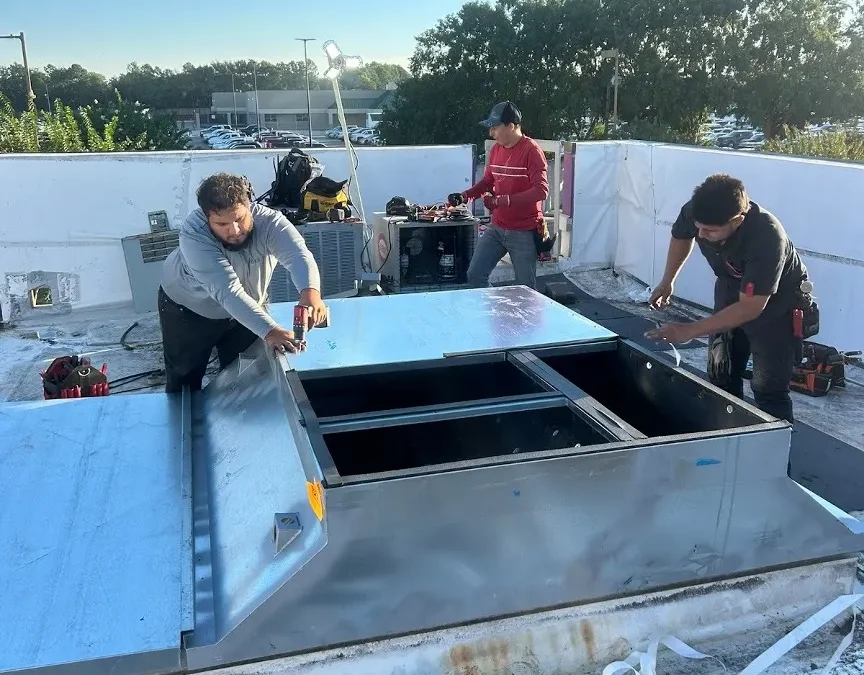
Commercial HVAC systems in Houston face some of the harshest operating environments in the country. Long cooling seasons, high humidity, and heavy daily use place constant strain on rooftop units, split systems, heat pumps, and commercial ventilation equipment. For facility managers and business owners, choosing a qualified contractor is not just about solving a comfort problem. It is about protecting productivity, reducing operating expenses, and ensuring continuity for the people who rely on your building.
With that in mind, here are the ten areas that matter most when hiring a commercial HVAC contractor.
1. Verify Proper Texas Licensing and Commercial Insurance
Commercial buildings cannot afford corners cut on qualifications. Any contractor performing installation, repairs, or maintenance must hold a valid Texas Department of Licensing and Regulation license, and the classification should match commercial needs. Just as important is confirming general liability insurance and workers’ compensation coverage suited for work on large equipment and multi-story facilities.
Why it matters:
Commercial environments involve higher risk, heavier equipment, and more occupants. Proper licensing and insurance protect your building and reduce exposure to costly claims.
2. Look Beyond Basic Licensing to Confirm Advanced Commercial Expertise
Licensing sets a baseline. Commercial capability goes well beyond that. Contractors who invest in advanced training, NATE certification, or manufacturer-specific programs are often better equipped to handle the complexities of multi-zone systems, rooftop units, controlled environments, and digital building management systems.
What to ask:
Does your team have specialized training for commercial equipment or systems like RTUs or VRF?
3. Expect a Thorough On-Site Evaluation Before Any Estimate
Commercial HVAC cannot be priced or planned from a phone call. A reliable contractor will insist on examining your facility, evaluating equipment access, measuring interior loads, assessing ductwork and ventilation, and reviewing building usage patterns.
What to avoid:
Any contractor offering a firm price without stepping foot inside the building.
This is one of the strongest red flags in commercial HVAC.
4. Request a Detailed Written Proposal With Clear Specifications
Commercial proposals should reflect the scale of the project. Look for clearly listed equipment models, efficiency ratings, labor scope, material details, timelines, warranty terms, and permit expectations. A proposal that lacks detail is often an early sign of cost overruns or unclear expectations later.
Why it matters:
Commercial facilities depend on documentation. It creates accountability, supports future maintenance, and ensures the project aligns with code and operational needs.
5. Confirm They Have Experience With Your Type of System and Building
Not every contractor understands the demands of a warehouse compared to a restaurant, medical office, or retail space. Each commercial environment comes with different ventilation requirements, zoning needs, and operational patterns.
What to ask:
Have you installed or serviced systems in buildings similar to ours?
Why it matters:
Familiarity with your environment reduces installation errors and speeds up service calls.
6. Review Efficiency Recommendations and Long-Term Operating Costs
Energy consumption is one of the biggest expenses in commercial properties. A qualified contractor should explain how different equipment options impact operating costs, not just upfront price. They should also help identify utility incentives or efficiency paths that reduce long-term load on your building.
What to avoid:
Proposals focused entirely on the “cheapest equipment.”
Low efficiency may cost significantly more over the equipment’s lifespan.
7. Understand Warranty Terms and Ongoing Service Support
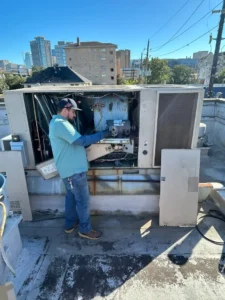
Commercial HVAC systems operate for far more hours than residential. Because of this, your contractor’s service policies and response capabilities matter as much as the installation itself. Clarify what is covered by the manufacturer, what is covered by the contractor, and what support options are available if something fails during peak season.
What to ask:
What are your response times for commercial clients and what is included in your installation warranty?
8. Check Reputation, Service History, and Commercial References
Commercial HVAC requires reliability, not guesswork. Look at reviews, response patterns, and project history. Speaking directly with other commercial clients helps you understand real performance, not just the marketing version.
Why it matters:
Commercial customers often share how well the contractor handled scheduling, communication, unexpected issues, and project completion. These insights are invaluable.
9. Confirm Permit Handling, Code Compliance, and Safety Processes
Commercial HVAC installations must meet local code requirements and pass inspections. A responsible contractor will manage all permits, coordinate inspections, and follow documented safety procedures.
What to avoid:
Any suggestion that permits are optional or unnecessary.
This is a shortcut that creates major issues later and can void warranties.
10. Pay Attention to Communication and Professionalism From the Start
How a contractor communicates during the quoting phase is usually how they will communicate throughout the project. You want a partner who answers questions clearly, provides written details, and stays responsive. Poor communication early on often leads to missed expectations later.
Why it matters:
Commercial HVAC work is complex. Smooth communication helps keep projects on time, protects your budget, and ensures long-term service alignment.
Making an Informed Decision for Your Facility
Houston’s climate places intense pressure on commercial HVAC systems. A strong contractor relationship helps maintain comfort, keeps energy costs predictable, and reduces the chance of disruptive failures. Evaluating your contractor across these ten areas gives you confidence that your building is in capable hands.
Commercial HVAC Service You Can Trust in Houston
Top-Pick Mechanical supports commercial properties across Houston, Pearland, Sugar Land, Missouri City, and surrounding areas. Our licensed team provides clear proposals, precise installations, and dependable service grounded in honesty and real expertise. We focus on reliability, efficiency, and long-term performance for every building we serve.
For assistance with commercial HVAC installation, repairs, or maintenance, call 713-469-0024 or visit tpmechanical.pro.
People Also Ask (Commercial-Focused PAA)
- What should I look for in a commercial HVAC contractor in Houston?
Verify licensing, insurance, commercial experience, detailed proposals, and a proven track record with commercial facilities. Contractors should also perform a full on-site evaluation before providing pricing. - Why is commercial HVAC different from residential HVAC?
Commercial systems operate longer, handle larger loads, and manage multiple zones, requiring advanced training, specialized equipment, and stronger code compliance. - How do I know if a contractor is qualified for rooftop HVAC units?
Ask about experience with RTUs, manufacturer training, and projects completed in similar buildings. Contractors experienced with commercial rooftop units will be able to provide references. - Why is a written proposal important for commercial HVAC work?
Commercial proposals protect your budget and timeline by clearly outlining equipment specifications, labor expectations, warranties, and compliance requirements. - How does contractor selection affect long-term HVAC operating costs?
Proper sizing, correct installation, and quality equipment selection significantly improve efficiency and reduce ongoing energy expenses in commercial buildings.