
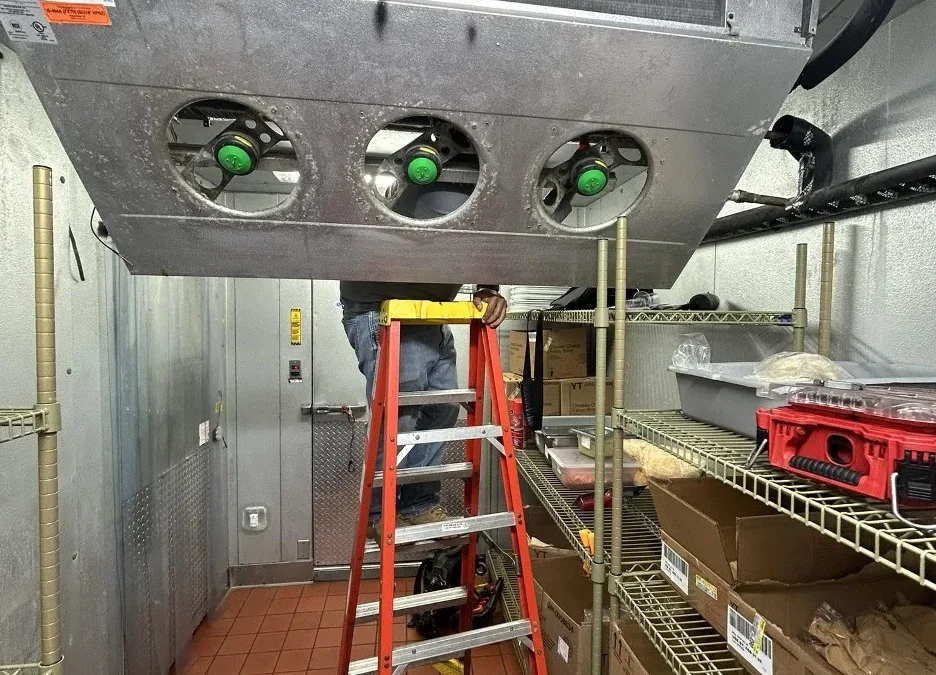
Walk-in freezers maintain temperatures well below zero while storing thousands of dollars in frozen inventory. When problems develop, businesses face urgent situations where every hour of malfunction risks product losses and operational disruptions. Understanding common freezer problems helps you respond quickly, determine whether issues require immediate professional service, or can be addressed through simple troubleshooting.
Some freezer problems signal serious mechanical failures requiring professional diagnosis and repair. Others result from simple operational issues that staff can resolve quickly. Knowing the difference prevents unnecessary service calls while ensuring you don’t delay calling technicians when problems exceed your ability to fix them safely.
Temperature Rising Above Safe Levels
Walk-in freezers maintaining temperatures above 0°F indicate developing problems requiring immediate attention. Frozen products begin thawing when temperatures rise above safe storage ranges, creating food safety concerns and potential inventory losses.
Quick troubleshooting steps:
Check that the door closes completely and latches properly. Doors left ajar or failing to seal allow warm air infiltration that overwhelms refrigeration capacity. Inspect door gaskets for damage, gaps, or areas where seals don’t contact the frame properly. Replace damaged gaskets immediately.
Verify that nothing blocks airflow around evaporator coils inside the freezer. Overstocked freezers with products packed against walls restrict air circulation, creating warm spots and reducing overall cooling efficiency. Maintain clear space around coil units for proper airflow.
Examine the condensing unit outside the freezer. Dirty condenser coils covered in dust, debris, or grease cannot reject heat effectively. Clean condenser coils using soft brushes or compressed air, being careful not to bend delicate fins.
When to call professionals:
Temperature problems persisting after basic troubleshooting indicate refrigerant loss, compressor failure, or control system malfunctions. These require professional diagnosis and repair from experienced commercial refrigeration technicians in Fresno. Refrigerant systems require licensed technicians with proper equipment and EPA certification.
Excessive Ice Buildup on Evaporator Coils
Heavy frost or ice accumulation on evaporator coils reduces cooling efficiency and indicates problems with defrost systems. Walk-in freezers use timed defrost cycles to prevent ice buildup that insulates coils and blocks airflow.
Common causes and solutions:
Defrost timers control when heating elements activate to melt accumulated frost. Failed timers prevent defrost cycles from occurring, allowing ice to build continuously. Listen during scheduled defrost times to verify heating elements activate. Defrost timers typically cycle every 6-8 hours, depending on usage patterns.
Defrost heaters that fail to activate leave frost in place even when timers function correctly. Heaters should warm perceptibly during defrost cycles. Cold heaters during scheduled defrost times indicate electrical problems or failed heating elements requiring replacement.
Defrost termination switches tell systems when coils reach sufficient temperature to end defrost cycles. Failed termination switches may allow defrost cycles to run too long, wasting energy, or terminate cycles too early, leaving frost in place.
Door openings introduce humidity that freezes on cold coil surfaces. Excessive door traffic, particularly in hot or humid conditions, overwhelms defrost system capacity. Minimize door opening duration and frequency during peak cooling demand periods.
Professional diagnosis needs:
Defrost system problems require systematic testing of electrical components, timers, heaters, and control systems. Technicians use specialized equipment to diagnose which component failures cause ice buildup. Attempting electrical repairs without proper training creates safety hazards and potentially damages expensive equipment.
Water Pooling on Freezer Floors
Water or ice accumulation on walk-in freezer floors indicates drain line problems requiring prompt attention. Blocked drains prevent condensate from defrost cycles from flowing out of the freezer, creating slip hazards and potentially damaging floor structures.
Immediate troubleshooting:
Locate the floor drain inside the freezer. Pour hot water mixed with approved drain cleaner down the drain to clear ice plugs or debris blockages. Many freezers have heated drain lines that prevent freezing, but these systems sometimes fail or prove insufficient during extreme cold periods.
Check drain lines outside the freezer for kinks, damage, or areas where lines sag, creating water traps. Drain lines must slope continuously downward from the freezer to the disposal point. Lines running through cold areas may require additional heat tape to prevent freezing.
Verify that the drain pan heaters outside the freezer function properly. These heaters prevent water from refreezing as it exits cold drain lines. Failed drain pan heaters allow ice dams to form that back up water into the freezer.
Preventing future drain problems:
Establish weekly drain cleaning protocols using approved commercial drain line cleaners. Regular maintenance prevents gradual buildup that eventually causes complete blockages. Never use harsh chemicals that might damage the drain line materials or create hazardous fumes.
Door Problems and Seal Failures
Walk-in freezer doors seal against extremely cold internal temperatures and face constant traffic throughout business operations. Door problems rank among the most common freezer issues and often prove easiest to address.
Common door issues:
Damaged or worn gaskets allow air infiltration that forces refrigeration systems to work harder while creating frost buildup around door frames. Inspect gaskets for tears, gaps, compression set (permanent deformation), or areas that don’t seal tightly against frames.
Replace gaskets showing visible damage or that fail the dollar bill test. Close a dollar bill in the door at multiple points around the frame. The bill should resist pulling out with moderate force. Easy extraction indicates poor seal contact requiring gasket replacement.
Door hinges loosen over time from repeated opening and closing. Loose hinges allow doors to sag out of alignment with frames, creating gaps that prevent proper sealing. Tighten hinge bolts and inspect for wear. Replace worn hinges before door misalignment causes permanent frame damage.
Latch mechanisms wear or break, preventing doors from closing securely. Test latches to ensure they engage fully and hold doors firmly against frames. Adjust or replace malfunctioning latches promptly.
Safety reminder:
Walk-in freezer doors must include interior release mechanisms allowing people to exit even when doors latch from the outside. Test interior releases monthly to ensure proper function. Failed releases create life-threatening situations if anyone becomes trapped inside.
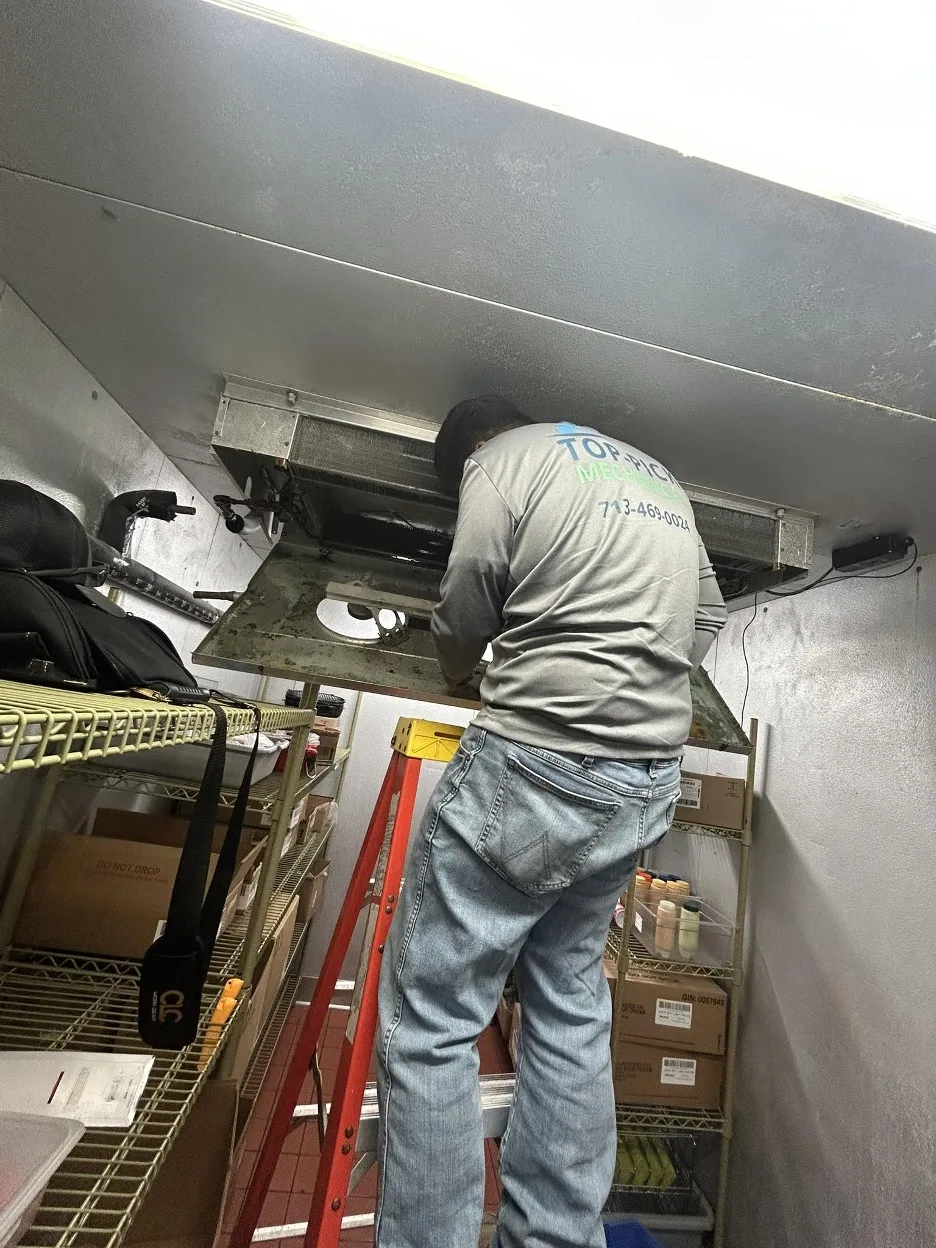
Compressor Running Constantly
Compressors that never cycle off work excessively hard, consume maximum electricity, and face accelerated wear leading to premature failure. Several conditions cause continuous compressor operation.
Diagnostic checks:
Verify thermostat settings match your target temperature range. Accidentally adjusted the thermostats set too low, forcing systems to chase temperatures they cannot achieve, resulting in continuous operation.
Check the differential setting on temperature controls. Differential determines the temperature range between the compressor start and stop points. Narrow differentials cause frequent cycling, while settings that are too wide allow excessive temperature swing.
Measure actual freezer temperature using accurate thermometers rather than relying solely on built-in displays. Control system sensor failures sometimes provide incorrect temperature readings to control boards, causing inappropriate compressor operation.
Systems low on refrigerant run continuously, trying to achieve target temperatures. Refrigerant loss requires professional service to locate leaks, repair damage, and recharge systems properly. Never attempt refrigerant work without proper licensing, equipment, and training.
When continuous running indicates serious problems:
Compressors struggling mechanically run constantly while producing inadequate cooling. Unusual noises, excessive vibration, or hot spots on compressor housings indicate developing mechanical failures requiring immediate professional attention. Continuing to operate failing compressors often causes catastrophic damage requiring complete replacement instead of repairs that might have been possible earlier.
Fan Motor Failures
Walk-in freezers use multiple fan motors—evaporator fans circulate cold air throughout the space while condenser fans move air across outdoor coil units. Fan failures cause immediate cooling problems.
Identifying fan problems:
Evaporator fan failures stop air circulation, creating temperature stratification where some areas remain adequately cold while others warm significantly. Products near the evaporator may freeze solid while items toward the door thaw.
Listen for unusual fan noises, including grinding, squealing, or rattling that indicate bearing wear or blade damage. Fans making abnormal sounds require immediate inspection and likely replacement before complete failure occurs.
Condenser fan failures cause high head pressure that forces compressors to work harder and may trigger safety cutoffs that shut systems down completely. Outdoor condenser units should have fans running whenever compressors operate during cooling cycles.
Safety warning:
Never operate freezers with fan guards removed or damaged. Spinning fan blades cause serious injuries. Always disconnect power before inspecting or working near fan motors.
Frost Buildup Around Door Frames
Ice or frost accumulating around door perimeters indicates air leakage requiring attention. While minor frost accumulation proves normal in high-traffic freezers, heavy buildup signals problems.
Addressing door frame frost:
Inspect door gaskets for proper seal contact around the entire perimeter. Gaps anywhere in the seal allow warm, humid air to enter, where it immediately freezes on cold surfaces.
Check door alignment. Properly hung doors sit evenly in frames without visible gaps. Sagging doors require hinge adjustment or replacement to restore proper positioning.
Examine the door sweep at the bottom threshold. These seals wear from foot traffic and cart wheels passing over them repeatedly. Replace worn sweeps that don’t seal completely against the floor.
Excessive frost may also indicate door heaters failing to prevent ice formation at seal interfaces. Some freezer doors include low-wattage heating elements that keep seal areas just warm enough to prevent ice buildup without compromising sealing efficiency.
Control System Malfunctions
Modern walk-in freezers use electronic control systems managing defrost cycles, temperature monitoring, and alarm functions. Control failures create various symptoms that may seem unrelated.
Common control issues:
Temperature display errors or frozen screens indicate control board problems. Power cycling controls by turning circuit breakers off for 30 seconds sometimes resolves minor electronic glitches. Persistent display problems require board replacement.
Alarm systems that falsely trigger repeatedly often indicate sensor problems rather than actual temperature issues. Check sensor probe connections and test sensor accuracy against known-good thermometers.
Defrost problems often trace to control system issues rather than mechanical component failures. Controls triggering defrost cycles at incorrect times or durations cause ice buildup or excessive energy consumption.
Emergency Response Priorities
When walk-in freezer problems develop, assess urgency based on temperature stability and product safety. Rising temperatures above 10°F create urgent situations requiring immediate professional response. Product safety concerns always override repair cost considerations.
Move high-value or temperature-sensitive products to backup freezer space if available while awaiting repairs. Document product temperatures and conditions for insurance purposes if significant losses appear likely.
Avoid repeatedly checking freezers experiencing problems. Each door opening introduces additional warm air that worsens temperature issues. Once you’ve verified the problem and called for service, minimize door openings until technicians arrive.
Frequently Asked Questions
What temperature should walk-in freezers maintain?
Walk-in freezers should maintain temperatures between -10°F and 0°F for proper food preservation and safety. Temperatures rising above 10°F indicate problems requiring immediate attention to prevent product losses and food safety concerns.
How often should walk-in freezers defrost?
Most walk-in freezers defrost automatically every 6-8 hours, depending on usage patterns and humidity levels. Facilities with heavy door traffic or high-humidity environments may require more frequent defrost cycles to prevent excessive ice buildup on evaporator coils.
Can I fix walk-in freezer problems myself?
Business staff can address simple issues like cleaning condenser coils, replacing door gaskets, clearing drain lines, and verifying proper door closure. However, refrigerant system work, electrical repairs, and component replacements require licensed professional technicians with specialized equipment and training.
What causes walk-in freezers to stop working suddenly?
Sudden freezer failures typically result from compressor problems, refrigerant leaks, electrical component failures, or control system malfunctions. Power supply issues, tripped breakers, or blown fuses also cause immediate shutdowns. Professional diagnosis identifies specific failure causes.
How much does walk-in freezer repair typically cost?
Repair costs vary widely based on problem severity. Simple fixes like gasket replacement may range between $200-400, while major repairs involving compressor replacement, refrigerant leak repair, or control system replacement range from $1,500-5,000. Emergency service and parts availability affect final costs.
Get Expert Walk-In Freezer Repair
Walk-in freezer problems require quick diagnosis and effective solutions that protect valuable inventory and restore normal operations. Understanding common issues helps you respond appropriately, but professional expertise ensures repairs address underlying causes rather than just symptoms.
Top Pick Mechanical delivers fast, reliable commercial refrigeration repair service for businesses throughout Fresno and surrounding Texas communities. Our experienced technicians diagnose walk-in freezer problems accurately and complete repairs efficiently to minimize downtime and product losses. We understand that freezer emergencies can’t wait, and we respond quickly when your business faces urgent refrigeration problems.
Contact Top Pick Mechanical at 713-469-0024 for walk-in freezer repairs that get your equipment running reliably and protect your frozen inventory from temperature-related losses.