
A commercial HVAC system represents one of the single largest capital investments your business makes in its physical infrastructure. Rooftop units, air handlers, chillers, and supporting equipment collectively cost tens of thousands of dollars to install, sometimes significantly more for large commercial facilities. Yet most businesses replace systems years before their actual designed lifespan simply because consistent maintenance practices were never established.
Well-maintained commercial HVAC systems routinely deliver 20-25 years of reliable service. Systems that receive minimal attention often require replacement within 10-12 years. The difference between these outcomes isn’t luck or equipment quality; it comes down entirely to how the system is treated throughout its operational life. Every year of extended service life represents tens of thousands of dollars in deferred replacement costs that go directly to your bottom line.
Commit to Scheduled Planned Maintenance Program
The single most impactful decision you can make for commercial HVAC longevity is establishing and maintaining a consistent planned maintenance schedule. Planned maintenance isn’t optional for commercial systems; it’s the fundamental practice that determines whether your investment delivers full value.
Commercial HVAC systems require professional service at a minimum twice annually, ideally in spring before cooling season demands peak and in fall before heating season begins. These bi-annual visits allow technicians to address issues developed during the previous operating season before the system faces its next period of peak demand.
During each professional service visit, technicians inspect refrigerant levels, test electrical components, lubricate moving parts, calibrate controls, measure system performance against design specifications, and identify developing problems before they cause failures.
Choosing the right commercial HVAC contractor in Houston ensures you receive quality maintenance that actually protects your investment rather than just checking boxes.
Change Air Filters on Schedule Without Exception
Air filters protect HVAC systems from the airborne particles that accumulate on heat exchange surfaces and moving components throughout facilities. Clogged filters force systems to work against increased resistance, consuming substantially more energy while stressing mechanical components unnecessarily.
Commercial HVAC filters require monthly inspection and replacement on schedules determined by your specific environment. Facilities with high dust levels, manufacturing operations, heavy foot traffic, or pet-friendly policies need more frequent filter changes than standard office environments. Using a calendar-based replacement schedule regardless of apparent filter condition proves more effective than waiting until filters appear dirty.
Never operate commercial HVAC systems with filters removed to improve airflow. Unfiltered operation allows contaminants to coat evaporator and condenser coils directly, creating insulating layers that reduce heat transfer efficiency dramatically. Restoring coil performance after unfiltered operation requires professional cleaning that could have been avoided entirely.
Upgrade to higher-efficiency filtration when your system can support it. Higher MERV-rated filters capture more contaminants before they reach system components. Consult with technicians to determine the highest efficiency filter your specific system handles without creating excessive static pressure that reduces airflow.
Protect and Maintain Outdoor Equipment
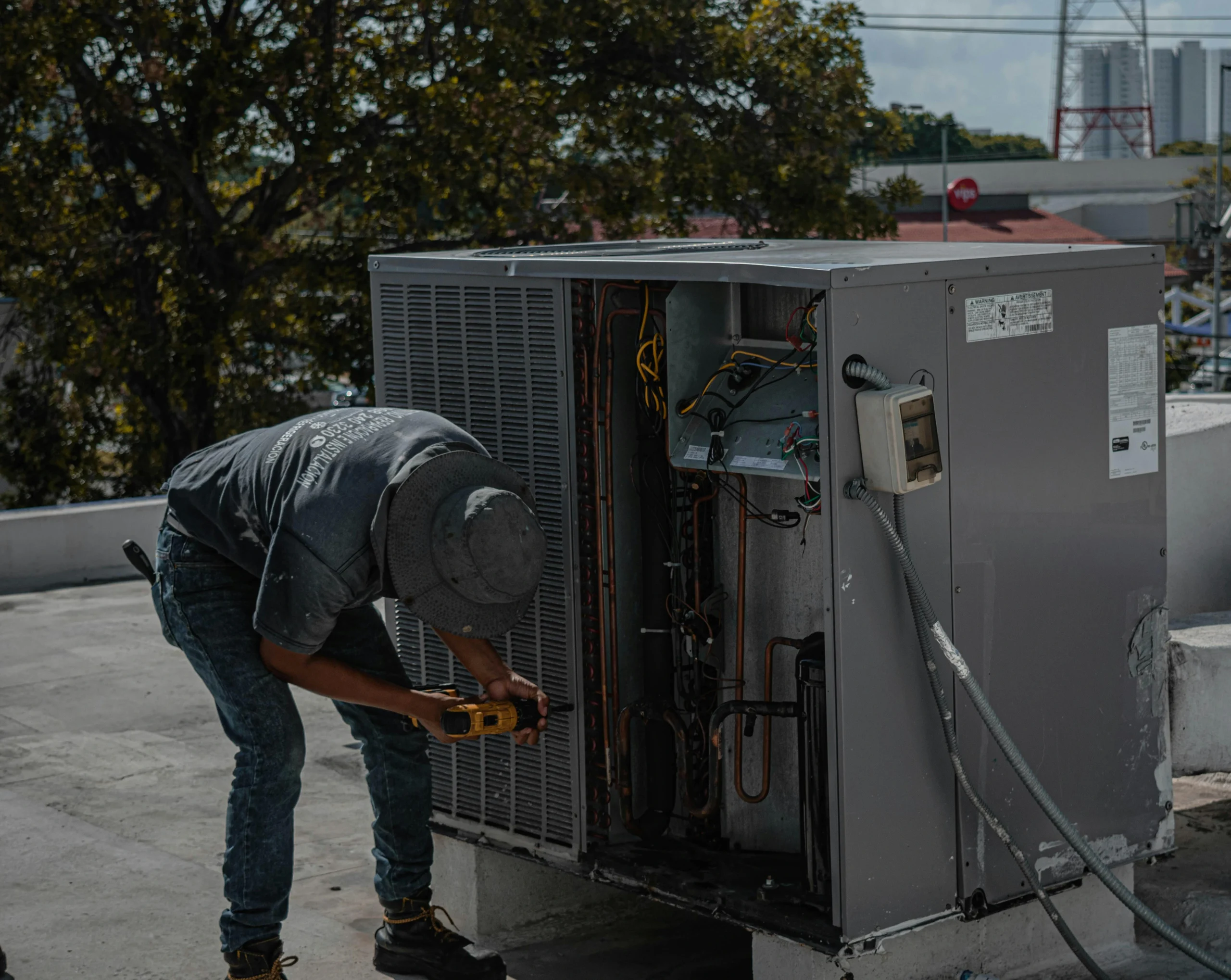
Commercial HVAC condensing units and rooftop equipment operate in harsh outdoor environments year-round. Texas summer heat, humidity, occasional freeze events, and continuous exposure to UV radiation, wind-driven debris, and airborne contaminants all accelerate component deterioration.
Clear vegetation, debris, and obstructions from around all outdoor equipment. Maintain minimum clearances specified by manufacturers, typically 18-24 inches on all sides and 48 inches above units. Restricted airflow around condensing units causes high head pressure that stresses compressors and reduces system efficiency. Landscaping that looked acceptable at installation grows over the years to create airflow restrictions that undermine equipment performance.
Inspect outdoor equipment quarterly for physical damage, including bent fins, loose panels, deteriorating insulation on refrigerant lines, and signs of pest intrusion. Animals nesting in HVAC equipment cause expensive electrical and mechanical damage. Seal any openings that allow pest access to equipment interiors.
Clean condenser coils annually at a minimum, more frequently in dusty or agricultural environments. Dirty condenser coils reduce heat rejection efficiency, forcing systems to run longer cycles and consume more energy while accelerating compressor wear. Professional coil cleaning using appropriate chemicals and techniques restores efficiency without damaging delicate coil fins.
Monitor and Optimize System Controls
Building automation and HVAC control systems represent significant investments that directly impact operational costs and equipment longevity. Yet many commercial facilities run controls with factory default settings that don’t reflect actual building occupancy patterns, usage schedules, or operational requirements.
Program setback temperatures for unoccupied periods. Conditioning unoccupied buildings to occupied comfort levels wastes energy and accumulates unnecessary runtime on HVAC equipment. Modern programmable and smart controls allow precise scheduling that reduces runtime during unoccupied periods while ensuring comfortable conditions when staff and customers arrive.
Verify that controls actually execute programmed schedules. Control programming drifts over time as batteries fail, software updates change settings, or manual overrides get left in place. Regularly confirm that systems operate according to intended schedules and that temperature setpoints reflect current occupancy patterns.
Calibrate temperature sensors annually. Sensors reading inaccurate temperatures cause systems to over-condition or under-condition spaces, consuming excess energy while failing to maintain comfortable conditions. A sensor reading just three degrees high forces systems to cool unnecessarily during every occupied hour, accumulating substantial wasted energy and runtime over the years.
Zone control systems allow different building areas to receive conditioning according to their specific needs rather than treating entire facilities uniformly. Proper zoning reduces runtime in less-used areas while maintaining appropriate conditions in high-demand spaces.
Address Small Problems Before They Become Large Ones
Commercial HVAC systems communicate developing problems through performance changes, unusual sounds, increased energy consumption, and comfort complaints from building occupants. These signals indicate conditions requiring professional attention, not eventually, but promptly.
Unusual sounds, including rattling, squealing, grinding, or banging, indicate mechanical problems in early stages. Loose panels, failing bearings, worn belts, and deteriorating mechanical components all make distinctive sounds before causing complete failures. Technicians identifying problems at this stage perform repairs costing hundreds of dollars rather than thousands.
Rising energy consumption without changes in occupancy or weather patterns signals declining system efficiency. Review utility bills monthly for unexplained increases. A system consuming 15-20% more energy than the same period in previous years indicates developing problems reducing efficiency that professional service can typically resolve.
Comfort complaints from building occupants about uneven temperatures, humidity problems, or inadequate airflow indicate system performance issues worth investigating. Occupant comfort feedback provides valuable information about developing problems that might not yet appear in system diagnostics.
Refrigerant leaks require immediate professional attention. Operating HVAC systems with low refrigerant damages compressors rapidly while reducing efficiency and capacity. Refrigerant doesn’t deplete during normal operation; low levels always indicate leaks requiring location and repair before recharging.
Maintain Proper Airflow Throughout the System
Commercial HVAC performance depends on consistent, unrestricted airflow through every system component. Restrictions anywhere in airflow paths reduce efficiency, increase energy consumption, and stress mechanical components unnecessarily.
Inspect and clean supply and return air grilles quarterly. Blocked grilles from furniture placement, stored materials, or accumulated dust reduce airflow without triggering obvious symptoms until performance suffers noticeably. Keep all supply and return grilles clear of obstructions at all times.
Clean evaporator coils during professional maintenance visits. Dirty evaporator coils reduce heat transfer efficiency, cause icing problems, and restrict airflow through systems. Professional cleaning removes accumulated contaminants that standard filter maintenance cannot prevent entirely.
Check ductwork conditions during building renovations or when accessing ceiling spaces. Disconnected duct sections, significant leakage at joints, and collapsed flexible duct sections all reduce system efficiency by conditioning spaces other than intended. Duct sealing and insulation improvements deliver measurable efficiency gains and extend system component life.
Balance airflow distribution throughout facilities to ensure consistent conditioning across all spaces. Poorly balanced systems run longer to satisfy thermostat setpoints in problem areas while over-conditioning other zones, accumulating unnecessary runtime that accelerates wear on mechanical components.
Manage Indoor Humidity Effectively
Houston and surrounding Gulf Coast communities experience humidity levels that create specific challenges for commercial HVAC systems. Excessive indoor humidity forces HVAC systems to remove moisture continuously, adding to cooling loads and increasing system runtime throughout humid months.
Seal building envelope penetrations that allow humid outdoor air infiltration. Windows, doors, utility penetrations, and roof connections all represent potential infiltration points. Air sealing reduces humidity loads while improving energy efficiency throughout the year.
Verify that exhaust ventilation systems balance properly with makeup air systems. Negative pressure conditions in buildings draw humid outdoor air through every available gap in the building envelope. Balanced ventilation prevents negative pressure while ensuring adequate fresh air for occupant comfort and code compliance.
Consider dedicated dehumidification equipment for facilities experiencing persistent humidity problems despite properly functioning HVAC systems. Standalone dehumidifiers reduce humidity loads on primary HVAC equipment, extending compressor life and improving overall system performance during peak humidity periods.
Invest in Staff Training and Awareness
Building occupants and facility staff directly affect HVAC system longevity through daily behaviors and decisions. Training staff on practices that protect system performance delivers long-term benefits that extend well beyond formal maintenance programs.
Educate staff about thermostat usage. Frequent large temperature adjustments throughout the day cause systems to cycle excessively, accumulating unnecessary wear on compressors and other mechanical components. Establish clear policies about acceptable temperature ranges and discourage thermostat adjustments outside these parameters.
Train staff to report unusual sounds, comfort problems, and equipment warning lights immediately rather than assuming someone else will handle it. Early reporting transforms potential emergency repairs into routine service calls. Create clear channels for reporting HVAC concerns so issues reach appropriate decision-makers quickly.
Enforce policies against blocking supply and return air grilles with furniture, equipment, or stored materials. Explain to staff how blocked airflow affects both comfort and equipment performance. Understanding the reasons behind facility policies improves compliance compared to rules without context.
Plan for Equipment End-of-Life Strategically
Even well-maintained commercial HVAC systems eventually reach the end of productive service life. Strategic planning for equipment replacement allows businesses to make informed decisions based on operational needs rather than reacting to emergency failures.
Track system age and maintenance history for all major HVAC components. Equipment approaching 15-20 years of service warrants evaluation even when currently functioning adequately. Older systems consuming significantly more energy than modern equipment sometimes justify early replacement based on energy savings that offset capital costs.
Establish capital replacement reserves for HVAC equipment. Planned replacements allow businesses to choose timing, select appropriate replacement equipment through competitive bidding, and coordinate installations during periods of minimal operational impact. Emergency replacements after catastrophic failures offer none of these advantages.
Consult with experienced HVAC professionals when evaluating aging equipment. Technicians familiar with your systems provide objective assessments of remaining service life, upcoming major repair needs, and the economics of continued maintenance versus replacement. This guidance helps businesses make informed decisions rather than reacting emotionally to repair invoices.
Frequently Asked Questions
How long should a commercial HVAC system last with proper maintenance?
Well-maintained commercial HVAC systems typically last 20-25 years, depending on equipment quality, operating demands, and consistency of maintenance. Systems receiving minimal maintenance often require replacement within 10-12 years. Consistent planned maintenance programs represent the single most effective way to maximize system lifespan and protect your capital investment.
How often should commercial HVAC systems receive professional service?
Commercial HVAC systems require professional maintenance at a minimum twice annually, once in spring before cooling season and again in fall before heating season. High-demand facilities, systems in harsh environments, or older equipment may benefit from quarterly professional service to maintain peak performance and catch developing problems earlier.
What is the most common reason commercial HVAC systems fail prematurely?
Deferred maintenance causes most premature HVAC failures. Neglected filter changes, skipped professional service, and ignored early warning signs allow small problems to cascade into major failures. Dirty coils, low refrigerant, and worn components that professional maintenance would have identified and addressed early instead cause compressor failures and system breakdowns requiring expensive emergency repairs or complete replacement.
How much energy does a properly maintained commercial HVAC system save?
Well-maintained commercial HVAC systems consume 20-30% less energy than neglected units operating at reduced efficiency. For commercial facilities spending $2,000-5,000 monthly on energy, this difference represents $400-1,500 in monthly savings. Over years of operation, energy savings from proper maintenance often exceed the total cost of professional service programs many times over.
When should a business replace rather than repair aging HVAC equipment?
Consider replacement when repair costs exceed 50% of new equipment costs, when systems require repeated major repairs within short intervals, when equipment reaches 15+ years of age with declining efficiency, or when refrigerant type is being phased out, making future service increasingly expensive. Consult with experienced HVAC professionals to evaluate the economics of specific situations.
Maximize Your Commercial HVAC Investment
Commercial HVAC longevity comes from consistent, systematic care that protects equipment from the preventable failures that end systems prematurely. Every best practice in this guide represents a proven strategy for extending service life, reducing operating costs, and protecting the substantial capital investment your HVAC system represents.
Top Pick Mechanical delivers comprehensive commercial HVAC maintenance and repair services for businesses throughout Fresno and surrounding Texas communities. Our experienced technicians understand the demands that the Texas climate places on commercial HVAC systems and provide service programs designed to maximize equipment longevity while minimizing operational costs. We build long-term relationships with commercial clients, learning your systems thoroughly to provide increasingly effective maintenance as we understand your facility’s specific needs.
Contact Top Pick Mechanical at 713-469-0024 to discuss a planned maintenance program that extends your commercial HVAC system’s lifespan and protects your business from the costs and disruptions of premature equipment failure.