

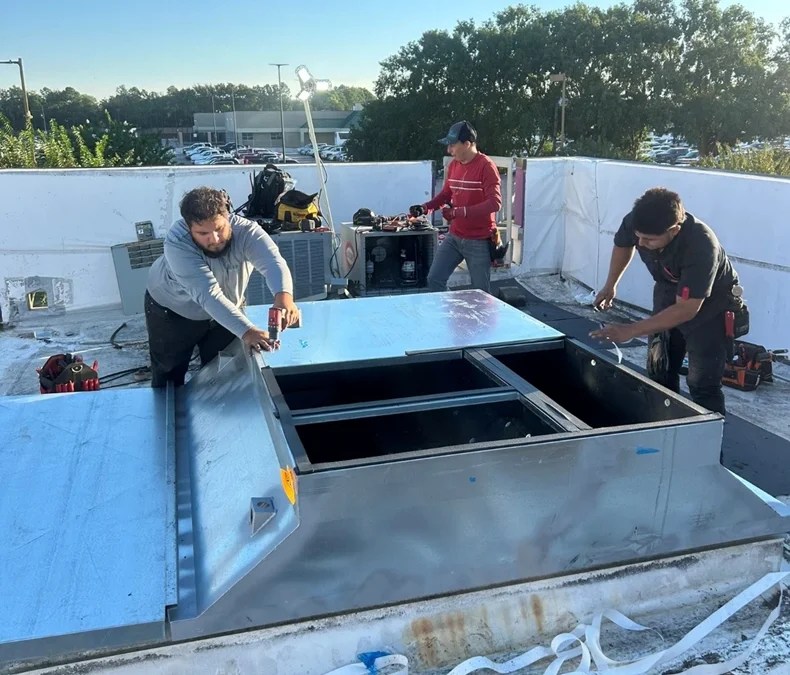
Selecting the right size HVAC system for commercial spaces represents one of the most critical decisions affecting long-term operational costs, occupant comfort, and equipment reliability. Unlike residential systems, where sizing calculations follow relatively straightforward formulas, commercial HVAC sizing requires a comprehensive analysis of multiple factors, including building construction, occupancy patterns, heat-generating equipment, ventilation requirements, and local climate conditions.
Improperly sized systems, whether too large or too small, create operational problems that persist throughout equipment life. Oversized systems waste capital during installation, cycle inefficiently during operation, fail to control humidity properly, and cost more to maintain. Undersized systems run continuously without satisfying cooling or heating demands, consume excessive energy, wear out prematurely, and leave occupants uncomfortable. Getting sizing right from the start ensures optimal performance that extends your commercial HVAC system’s lifespan while minimizing operational costs.
Why Commercial HVAC Sizing Is More Complex Than Residential
Commercial buildings present challenges that residential calculations never encounter. Multiple zones with different occupancy schedules, varying heat loads throughout buildings, sophisticated ventilation requirements, and diverse space uses all complicate sizing determinations.
Office buildings might house server rooms generating substantial heat, requiring dedicated cooling alongside conference rooms used intermittently and private offices with moderate conditioning needs. Restaurants combine dining spaces needing customer comfort with kitchens generating extreme heat loads from cooking equipment. Retail stores face challenges from large glass storefronts creating solar heat gain, frequent door openings introducing outdoor air, and varying customer traffic throughout days and seasons.
Building construction methods dramatically affect HVAC sizing requirements. Older buildings with minimal insulation, single-pane windows, and leaky construction require substantially larger systems than modern structures built to current energy codes with high-performance insulation, efficient windows, and tight building envelopes.
Equipment heat loads from computers, servers, industrial machinery, commercial cooking equipment, and lighting all contribute to cooling requirements. A law office with dozens of computers and copiers generates different heat loads than a boutique retail space with minimal equipment, despite similar square footage.
The Dangers of Oversized Commercial HVAC Systems
Many people assume larger HVAC systems provide better performance and capacity reserves for future needs. This thinking proves costly. Oversized systems create multiple operational problems that undermine performance and increase costs throughout equipment life.
Short cycling occurs when oversized systems satisfy thermostat demands too quickly, shutting down before completing full operating cycles. Frequent starting and stopping accelerate wear on compressors, fan motors, and electrical components while consuming excess energy during high-amperage startup sequences.
Poor humidity control results from short cycling that cools the air too rapidly without adequate runtime for moisture removal. Occupants feel clammy despite adequate temperatures because systems don’t run long enough to dehumidify properly. This proves especially problematic in humid climates like Texas, where moisture control matters as much as temperature.
Increased energy consumption occurs despite counterintuitive expectations. Oversized systems don’t run more efficiently; they cycle on and off wastefully while never achieving the steady-state operation where peak efficiency occurs. Studies show oversized systems can consume 20-30% more energy than properly sized equipment.
Higher installation costs for unnecessarily large equipment waste capital that could fund other facility improvements. Larger condensing units, air handlers, ductwork, and electrical service all cost more without providing proportional benefits.
Reduced equipment lifespan results from excessive cycling and inconsistent operation. Components designed for steady running cycles fail prematurely when subjected to frequent starts and stops that oversized systems require.
Uneven temperature distribution throughout buildings occurs when systems satisfy thermostats in some zones while inadequately conditioning others. Proper sizing matched to specific zone requirements prevents these comfort problems.
Problems Created by Undersized HVAC Systems
Undersized systems create equally serious problems from the opposite direction. Systems lacking adequate capacity cannot satisfy building demands, regardless of how hard or how long they operate.
Continuous operation without satisfying setpoints leaves occupants uncomfortable during peak demand periods. Undersized systems run constantly on hot summer days or cold winter periods without achieving target temperatures, creating productivity losses and customer complaints.
Excessive energy consumption occurs as equipment runs maximum hours attempting to meet unachievable targets. An undersized system running 12-14 hours daily consumes more energy than a properly sized system operating 8-10 hours while actually maintaining comfortable conditions.
Accelerated component wear from continuous operation shortens equipment life substantially. Compressors, fan motors, and mechanical components designed for cyclical operation fail prematurely under continuous running demands that undersized systems require.
Inability to handle peak loads during extreme weather or high occupancy events creates crises. An undersized system that struggles on typical summer days completely fails during heat waves when buildings need conditioning most desperately.
Higher maintenance costs result from excessive runtime and strain on components operating beyond design capacities. Undersized systems require more frequent repairs and earlier component replacements than properly sized equipment.
Indoor air quality problems develop when inadequate system capacity prevents proper ventilation delivery. Undersized systems prioritize cooling or heating over ventilation, allowing indoor air quality to deteriorate during high-demand periods.
Key Factors in Commercial HVAC Sizing Calculations
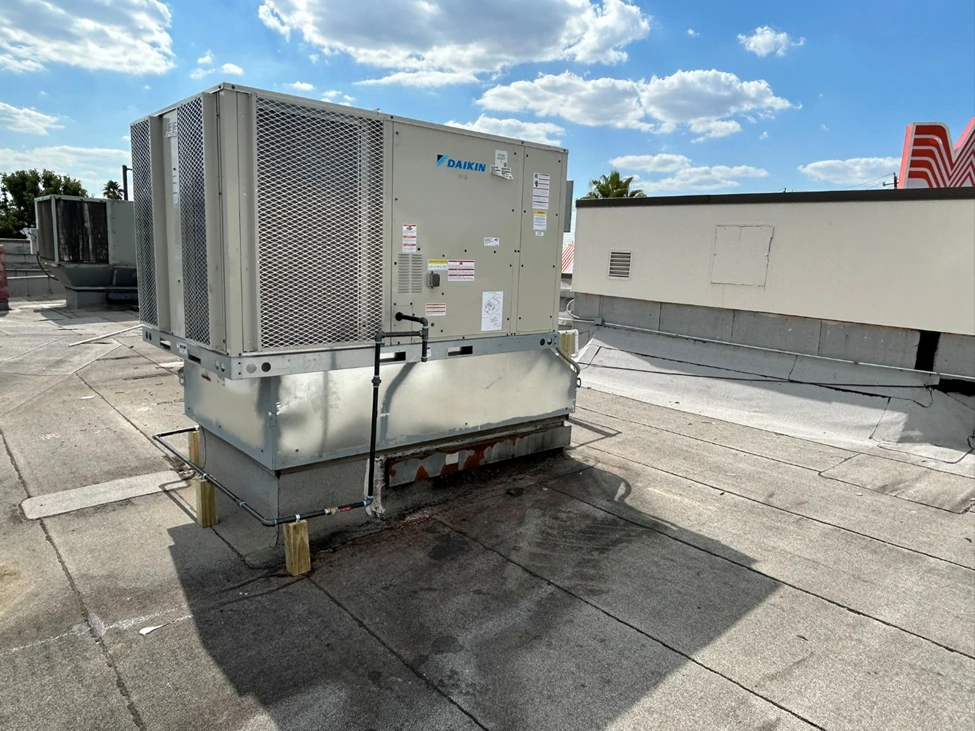
Professional HVAC sizing requires analyzing multiple factors that collectively determine appropriate equipment capacity. Shortcuts or rules of thumb inevitably produce inaccurate results, leading to improperly sized systems.
Building square footage provides baseline information, but alone proves insufficient for accurate sizing. Square footage must be combined with ceiling heights to calculate conditioned volume since eight-foot ceilings require a different capacity than twelve-foot ceilings in the same floor area.
Insulation values throughout building envelopes affect heat transfer rates that HVAC systems must overcome. Roof insulation, wall insulation, window performance, and foundation insulation all influence heating and cooling loads. Modern buildings with R-30 roof insulation and low-E windows require substantially less capacity than older buildings with R-11 insulation and single-pane glass.
Window orientation and area create solar heat gain requiring additional cooling capacity. South and west-facing windows experience more intense solar exposure than north-facing glass. Window area as a percentage of wall surface dramatically affects cooling requirements.
Occupancy levels and schedules determine internal heat gains from people and when conditioning is required. A hundred-person office generates substantial heat from occupants during business hours but minimal load overnight. Accurate occupancy data prevents oversizing for theoretical maximum occupancy that never occurs.
Equipment heat loads, including computers, servers, copiers, commercial kitchen equipment, manufacturing machinery, and lighting, all contribute to internal heat generation requiring removal. Modern LED lighting generates minimal heat compared to older fluorescent or incandescent systems, affecting cooling load calculations.
Ventilation requirements based on building codes and occupancy type add to conditioning loads. Fresh outdoor air must be conditioned to match indoor temperatures, creating additional load beyond simply cooling or heating interior spaces. Restaurants requiring substantial ventilation for cooking odors face higher ventilation loads than office buildings.
Climate data for specific locations provides design temperature parameters that sizing calculations use. Fresno and surrounding Texas communities experience different temperature extremes and humidity levels than other regions, requiring design parameters appropriate for local conditions.
Building use and internal heat sources vary dramatically by application. Restaurants, data centers, manufacturing facilities, retail stores, offices, and warehouses all present unique thermal characteristics affecting HVAC sizing.
The Manual J and Commercial Load Calculation Process
Residential HVAC sizing uses Manual J calculations while commercial applications typically employ more sophisticated software and methodologies appropriate for complex buildings. However, the principles remain similar, with a comprehensive analysis of all factors affecting heating and cooling loads.
Room-by-room load calculations account for different conditions throughout buildings rather than treating facilities as single zones. Conference rooms, private offices, server rooms, lobbies, and storage areas all present different loads requiring individual analysis.
Peak load calculations determine maximum capacity requirements based on worst-case conditions. Design temperatures representing extreme weather conditions, typically exceeded only 1-3% of annual hours, establish capacity targets ensuring adequate performance during demanding periods without grossly oversizing for average conditions.
Diversity factors account for the reality that not all building areas reach peak load simultaneously. A twenty-room office building never has all rooms occupied with all lights and equipment operating simultaneously while experiencing maximum solar gain. Diversity factors prevent oversizing for theoretical simultaneous maximums that never occur.
Equipment safety factors add modest capacity margin, typically 10-15%, accounting for calculation uncertainties and providing a reasonable reserve. Safety factors beyond this range create the oversizing problems discussed earlier.
Zoning analysis determines how many systems or zones are required to condition different building areas appropriately. Single large systems rarely serve diverse commercial buildings as effectively as multiple smaller systems dedicated to specific zones with similar characteristics.
Working with HVAC Professionals for Proper Sizing
Commercial HVAC sizing requires professional expertise combining engineering knowledge, software tools, and practical experience. Attempting to size systems without qualified professionals almost inevitably produces inappropriate results.
Licensed HVAC contractors or mechanical engineers perform load calculations using industry-standard software incorporating all relevant factors. Their analysis produces detailed reports supporting equipment size recommendations that can be reviewed and verified.
Site evaluations provide information that calculations alone cannot capture. Professionals walking through facilities identify unique conditions affecting loads, including unusual equipment, architectural features creating airflow challenges, and existing problems that new systems must address.
Equipment selection based on calculated loads considers specific manufacturer offerings and their performance characteristics. Contractors match calculated capacity requirements to available equipment sizes, considering efficiency ratings, physical dimensions, installation requirements, and long-term service considerations.
Ductwork design ensures properly sized HVAC equipment can actually deliver conditioned air throughout buildings. Undersized ductwork defeats properly sized equipment by restricting airflow. Professional design integrates equipment capacity with distribution system requirements.
Energy modeling using calculation results predicts operational costs for different equipment options. This analysis helps decision-makers understand long-term cost implications of various equipment choices, balancing installation costs against operational efficiency.
Common Sizing Mistakes to Avoid
Several sizing mistakes occur repeatedly in commercial applications despite being entirely preventable with proper analysis and professional guidance.
Rules of thumb like “400 square feet per ton” ignore the multiple factors actually determining loads and inevitably produce inappropriately sized systems. Commercial buildings vary too dramatically for any single ratio to provide accurate guidance.
Copying existing system sizes assumes current equipment is correctly sized and that building conditions haven’t changed since the original installation. Many existing systems are inappropriately sized, making direct replacement a mistake that perpetuates problems.
Ignoring building improvements, including new windows, added insulation, LED lighting upgrades, or occupancy changes, leads to oversized replacements when original systems were appropriately sized for previous conditions.
Adding excessive safety factors “just to be safe” creates the oversizing problems that undermine performance. Appropriate safety factors are already incorporated in professional calculations, and adding more proves counterproductive.
Prioritizing the lowest installation cost often results in purchasing whatever equipment dealers stock rather than equipment correctly sized for specific applications. The lowest-priced installation rarely proves most economical over equipment life.
Neglecting future changes that will affect loads leads to inappropriate sizing. Planned building expansions, anticipated occupancy increases, or equipment additions should be considered during sizing to prevent premature obsolescence.
The Role of Energy Efficiency in Sizing Decisions
Proper sizing allows the selection of high-efficiency equipment that reduces operational costs substantially. Understanding the importance of regular filter changes and proper maintenance helps high-efficiency equipment deliver rated performance throughout its service life.
High-efficiency equipment costs more initially but delivers lower operational costs through reduced energy consumption. Properly sized high-efficiency systems typically recover premium costs within 3-5 years through energy savings while providing superior performance and comfort.
Variable-capacity equipment adjusts output to match actual loads rather than operating at full capacity continuously. Multi-stage or variable-speed systems provide efficiency advantages impossible with single-stage equipment, particularly in commercial applications with varying loads.
Energy recovery ventilation systems reduce loads associated with conditioning outdoor air. These systems transfer heat between exhaust and supply airstreams, reducing the energy required to condition ventilation air that building codes require.
Building automation and controls optimize system operation based on actual occupancy and conditions. Smart controls reduce runtime during unoccupied periods, adjust output matching real-time loads, and coordinate multiple systems serving different zones.
Making the Final Equipment Selection
Sizing calculations establish capacity requirements, but final equipment selection considers additional factors beyond just capacity numbers.
Manufacturer reputation and local service availability affect long-term ownership experience. Equipment from manufacturers with established service networks and readily available parts proves easier to maintain than brands with limited local support.
Warranty coverage varies substantially between manufacturers and should be evaluated carefully. Longer comprehensive warranties protect businesses from unexpected repair costs during early equipment life.
Installation complexity and facility requirements influence equipment choices. Rooftop units, split systems, and packaged equipment each present different installation demands and spatial requirements that affect suitability for specific buildings.
Noise levels matter in commercial applications where mechanical equipment operates near occupied spaces. Specification sheets provide sound ratings, allowing comparison between options.
Future maintenance requirements and accessibility affect long-term costs. Equipment requiring specialized service or replacement parts that must be ordered proves more expensive to maintain than systems using readily available components.
Frequently Asked Questions
How do I know if my current commercial HVAC system is properly sized?
Signs of improper sizing include short cycling (frequent on/off), inability to maintain temperatures during peak conditions, excessive humidity despite adequate temperatures, unusually high energy bills, and uneven temperatures throughout the building. Professional load calculations comparing current capacity to actual requirements determine if your system is appropriately sized.
Can I add capacity to an existing commercial HVAC system instead of replacing it?
Adding capacity proves appropriate in some situations, like building expansions, but requires professional analysis. Simply adding equipment without proper sizing calculations often creates zoning problems and inefficiencies. Supplemental systems must be integrated properly with existing equipment and controls to function effectively together.
How much does proper commercial HVAC sizing cost?
Professional load calculations and system design typically cost $500-2,000, depending on building complexity and analysis depth. This investment proves minimal compared to equipment costs ranging from $10,000-100,000+ and prevents the much larger expenses from improperly sized systems that persist throughout equipment life.
What information do HVAC contractors need to size systems properly?
Contractors need building plans showing dimensions and construction details, window areas and orientations, insulation values, occupancy information, equipment and lighting inventories, ventilation requirements, usage schedules, and existing utility bills. More complete information enables more accurate sizing calculations.
How often should commercial HVAC systems be re-evaluated for proper sizing?
Re-evaluation should occur before major equipment replacement, following significant building renovations or expansions, after occupancy or use changes, and when persistent comfort or performance problems suggest sizing inadequacy. Building evolution may require a different capacity than when originally built.
Get Professional HVAC Sizing for Optimal Performance
Properly sized commercial HVAC systems deliver comfortable conditions efficiently while providing reliable service throughout their designed lifespan. The investment in professional load calculations and appropriate equipment selection pays dividends through reduced energy costs, fewer repairs, better comfort, and maximum equipment longevity.
Top Pick Mechanical provides comprehensive commercial HVAC design and installation services for businesses throughout Fresno and surrounding Texas communities. Our experienced technicians perform detailed load calculations, ensuring equipment selections match your specific building requirements. We consider all factors affecting system sizing and work with you to select equipment, balancing installation costs, operational efficiency, and long-term reliability. Our professional approach prevents the costly mistakes that improper sizing creates while ensuring your investment delivers optimal performance.
Contact Top Pick Mechanical at 713-469-0024 to discuss your commercial HVAC needs and receive professional guidance on properly sizing systems that serve your facility effectively and efficiently.