
Commercial ice machines rarely fail without warning. Most equipment sends clear signals days or even weeks before complete breakdowns occur. Business owners who recognize these warning signs can schedule repairs before emergencies develop, avoiding the operational disruptions and costs that accompany sudden equipment failures.
Understanding critical warning signs separates proactive businesses that maintain reliable operations from those constantly managing crises. The following five indicators signal that your ice machine requires immediate professional attention: not tomorrow, not next week, but today.
1. Ice Production Drops Significantly Below Normal Output
Your ice machine produces a consistent volume daily under normal operating conditions. Sudden drops in ice production, particularly reductions exceeding 25-30%, indicate serious developing problems that will worsen without intervention.
What reduced production means:
Ice machines experiencing capacity loss struggle with mechanical or refrigeration system problems. Compressors losing efficiency, refrigerant leaks reducing cooling capacity, or water system restrictions limiting ice formation all manifest as declining production before causing complete failures.
Restaurants and bars, depending on specific ice volumes, face immediate operational impacts when production drops. The gap between what your machine produces and what your business needs grows wider daily as problems progress. Waiting until the machine stops completely leaves you without alternatives when customer demand continues.
Why does this require immediate attention?
Refrigerant leaks, causing reduced capacity, worsen over time. Systems low on refrigerant force compressors to work harder, accelerating wear on expensive components. What might be a relatively affordable refrigerant recharge today becomes a complete compressor replacement if ignored.
Scale buildup restricting water flow reduces production gradually. The minerals continue accumulating, eventually blocking water systems completely. Early intervention allows cleaning and descaling. Delayed response requires component replacement when blockages cause damage.
Call a professional commercial refrigeration service in Fresno immediately when ice production drops noticeably. Technicians diagnose the underlying cause and repair problems before they escalate into equipment failures requiring emergency service during your busiest operating hours.
2. Ice Quality Changes: Cloudy, Soft, or Oddly Shaped Cubes
Clear, hard, properly formed ice indicates correct machine function. Changes in ice appearance or texture signal problems requiring immediate professional evaluation.
Cloudy or white ice suggests mineral buildup in water systems, filtration problems, or freezing cycle issues. While cloudy ice might seem like a minor aesthetic concern, it indicates conditions that progressively damage equipment and affect ice taste.
Soft or hollow ice that melts quickly points to incomplete freezing cycles. Machines failing to complete proper freeze cycles waste energy while producing inferior ice that dilutes beverages excessively. This symptom often accompanies refrigeration system problems, including low refrigerant, failing compressors, or temperature control malfunctions.
Irregular ice shapes or cubes that stick together indicate water distribution problems, mineral accumulation on evaporator plates, or mechanical issues with harvest cycles. Ice should release cleanly and separately during normal operation.
Health and safety considerations:
Ice quality directly impacts customer experience and safety. Cloudy ice may contain impurities or indicate conditions where bacteria and mold grow in water systems. Customers notice poor ice quality, and health inspectors evaluate ice appearance during facility inspections.
Strange-tasting ice drives customers away from restaurants and bars. Even if you don’t notice the taste, your customers absolutely do, and they remember negative experiences that keep them from returning.
Immediate action required:
Ice quality problems rarely improve spontaneously. The conditions causing poor ice quality intensify over time, eventually leading to complete equipment failure. Schedule professional service immediately when ice quality changes from normal appearance.
3. Unusual Noises: Grinding, Squealing, or Loud Humming
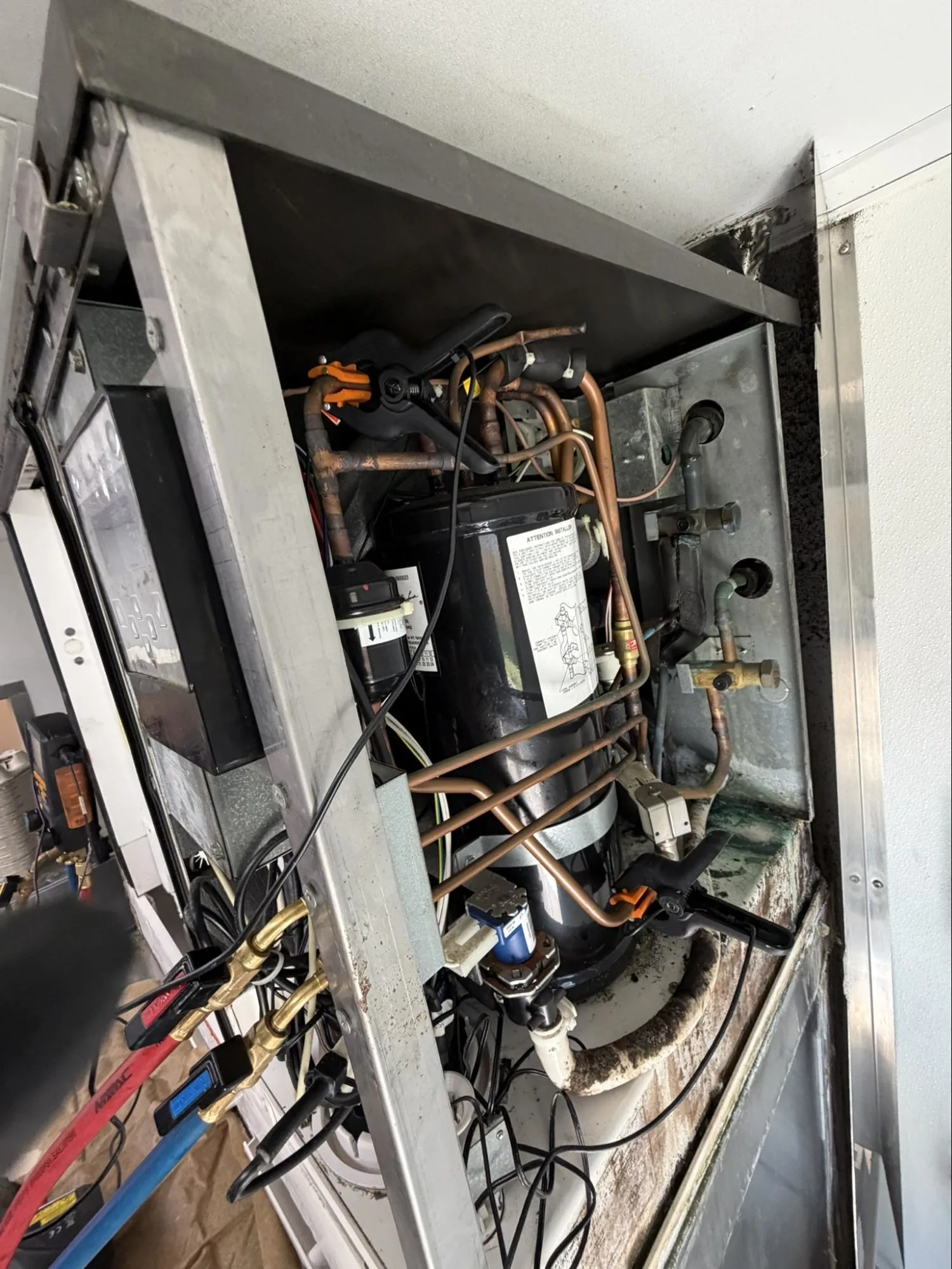
Commercial ice machines operate with consistent, predictable sounds. New or unusual noises indicate mechanical problems developing that will cause failures if not addressed promptly.
Grinding sounds suggest bearing failures in fan motors or compressors. Bearings wear gradually, producing increasingly loud grinding before complete seizure occurs. Continuing to operate equipment with failing bearings often damages motors beyond repair, converting a bearing replacement into a complete motor or compressor replacement.
Squealing or screeching typically indicates belt problems in belt-driven compressors or fan assemblies. Loose, worn, or glazed belts slip against pulleys, creating high-pitched sounds. Belt failures can cause immediate equipment shutdown and sometimes damage pulley systems.
Loud humming or buzzing often signals electrical problems, including failing compressor windings, loose electrical connections, or capacitor issues. Electrical problems create fire hazards and risk catastrophic component failures that destroy expensive equipment.
Rattling or vibration indicates loose components, worn mounting hardware, or unbalanced fan blades. While these might seem less serious than other sounds, vibration damages components over time and can indicate developing problems that will worsen.
Why sound changes matter:
Mechanical failures progress predictably from minor bearing wear to complete component destruction. Early intervention when unusual sounds first appear allows relatively inexpensive repairs. Delayed response results in cascading failures where one damaged component destroys others, multiplying repair costs.
Equipment operating with unusual sounds consumes more energy, produces less ice, and faces imminent complete failure. Every hour of continued operation in this condition accelerates damage and increases eventual repair costs.
Take action immediately:
When your ice machine develops new sounds, contact professional technicians the same day. Describe the specific sounds, when they occur, and any other symptoms you’ve noticed. This information helps technicians prepare appropriate tools and parts for efficient diagnosis and repair.
4. Water Leaks Inside or Around the Machine
Water appearing where it shouldn’t indicates problems requiring immediate attention. Ice machines manage substantial water volume, but all water should flow through the designed pathways without leaking.
Interior water pooling inside ice storage bins signals drain line blockages, failed door seals allowing condensation, or water system leaks. Water contamination risks product safety and creates conditions where mold and bacteria thrive.
External water leaks around machine bases or from connections indicate plumbing failures, damaged water lines, or cracked components. Even small leaks waste water continuously and create slip hazards while potentially damaging surrounding floors, walls, and equipment.
Water running continuously when the machine isn’t producing ice suggests inlet valve failures, control system problems, or stuck float mechanisms. This wastes water and money while indicating mechanical failures that will worsen.
Ice buildup outside normal areas shows water leaking and refreezing, indicating serious system problems. Ice forming on exterior surfaces or in unusual locations demonstrates water escaping from designed pathways, which leads to component damage and efficiency losses.
Immediate risks from water leaks:
Water leaks cause progressive damage extending far beyond the ice machine itself. Flooring materials deteriorate from constant moisture exposure. Electrical components near leaks face short circuit risks that create fire hazards. Mold growth from water leaks creates health concerns and expensive remediation requirements.
Health inspectors cite water leaks as serious violations, indicating poor equipment maintenance and potential contamination risks. Citations disrupt operations and damage business reputation.
Response required:
Turn off the water supply to leaking ice machines if the leaks are substantial. Contact a professional repair service immediately. Water leaks indicate failures that will not self-correct and typically worsen rapidly. Emergency response prevents water damage to facilities and protects equipment from moisture-related failures.
5. Machine Cycles On and Off Repeatedly (Short Cycling)
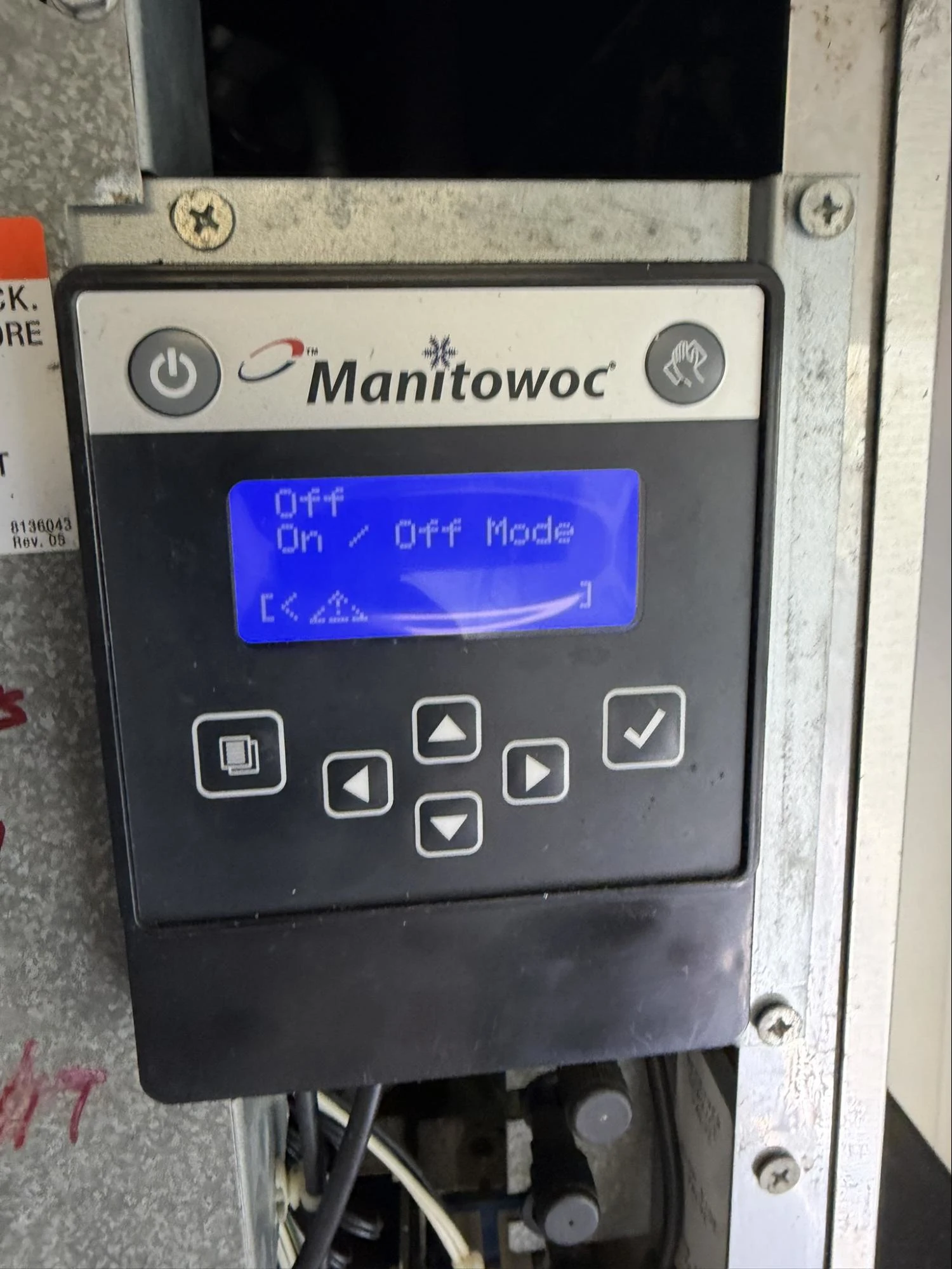
Ice machines should run through complete cycles with predictable timing. Short cycling, when compressors start and stop every few minutes rather than running normal extended cycles, indicates serious problems requiring immediate professional diagnosis.
What causes short cycling:
Low refrigerant levels prevent systems from satisfying temperature demands, causing compressors to cycle repeatedly without achieving proper cooling. Refrigerant loss signals leaks that must be located and repaired before systems can be recharged properly.
Failing compressors struggle to build proper pressure, causing repeated start attempts as systems try to achieve the required cooling capacity. Compressor problems represent expensive repairs that worsen dramatically when equipment continues operating in failed conditions.
Temperature control problems, including failed thermostats or sensor malfunctions, send incorrect signals to compressors, triggering inappropriate cycling. Control issues cause excessive wear on compressors and electrical components from repeated starting.
Dirty condenser coils restrict heat rejection, causing high-pressure cutoffs that shut systems down repeatedly. While coil cleaning might seem simple, equipment already displaying short cycling symptoms has usually sustained damage requiring professional assessment beyond just coil maintenance.
Why short cycling demands immediate attention:
Each compressor start cycle draws maximum electrical current, 5-6 times the normal running amperage. Repeated starting burns excessive energy while creating extreme wear on compressor components and electrical systems. Equipment short cycling can fail catastrophically within days or even hours.
Short cycling often indicates multiple simultaneous problems. By the time symptoms become obvious, underlying issues have typically progressed beyond simple fixes. Professional diagnosis identifies all contributing factors, so repairs address complete problems rather than just obvious symptoms.
Critical response timing:
Short cycling represents imminent equipment failure. Machines displaying this symptom face a complete breakdown within days at most. Some fail within hours of short cycling symptoms appearing. Contact emergency refrigeration service immediately when you observe this behavior.
Continuing to operate short-cycling equipment accelerates damage exponentially. The cost difference between early intervention and delayed response often exceeds thousands of dollars as additional components fail from excessive strain and improper operation.
Frequently Asked Questions
How quickly should I call for repair when I notice these warning signs?
Contact a professional ice machine repair service the same day you notice any of these five warning signs. These symptoms indicate problems that worsen rapidly, often causing complete equipment failure within 24-72 hours if not addressed. Early intervention prevents emergency breakdowns and reduces total repair costs significantly.
Can I continue using my ice machine while waiting for repairs?
For most warning signs, you can continue limited operation until technicians arrive, but reduce ice production demands and monitor closely for worsening symptoms. However, immediately shut down machines experiencing water leaks, severe short cycling, or loud grinding sounds, as continued operation risks catastrophic damage or safety hazards.
How much do emergency ice machine repairs typically cost?
Emergency repair costs vary based on specific problems but typically range from $300-$1,500 depending on required parts and labor. Repairs scheduled promptly when warning signs first appear cost 30-50% less than emergency repairs performed after complete equipment failure. Prevention and early intervention always cost less than crisis response.
Will my ice machine break down completely if I ignore these signs?
Yes. These five warning signs predict imminent complete equipment failure. Machines displaying these symptoms without professional intervention typically experience total breakdowns within days or weeks at most. The question isn’t whether failure will occur, but when, and under what circumstances, during planned repairs or during your busiest service period.
How can I prevent ice machine problems from developing?
Regular professional maintenance performed quarterly prevents most ice machine problems. Scheduled service identifies developing issues before they cause symptoms or failures. Maintenance programs cost substantially less than emergency repairs while maintaining reliable equipment performance that protects business operations.
Don’t Wait for Complete Equipment Failure
Ice machines displaying these warning signs need immediate professional attention. The difference between minor repairs and major equipment failures often comes down to response timing. Ice machine cleaning and maintenance costs between $300 and $500 per unit, depending on the size. Corrective repairs typically range from $1,000 to $3,000. Recognizing urgent symptoms and acting quickly protects your equipment investment while avoiding the operational disruptions that accompany emergency breakdowns.
Top Pick Mechanical delivers fast, expert commercial ice machine repair service throughout Fresno and surrounding Texas communities. Our experienced technicians diagnose problems accurately and complete repairs efficiently to restore reliable ice production. We understand that ice machine failures can’t wait, and we respond urgently when businesses face equipment emergencies. Our service protects your operations from extended downtime while preventing minor problems from escalating into expensive equipment failures.
Contact Top Pick Mechanical at 713-469-0024 immediately when you notice any ice machine warning signs. Early professional intervention saves money, prevents emergencies, and keeps ice flowing reliably for your customers and operations.